Friday, April 15, 2022

Etzba Elohim: The Finger of WHICH God?

The content on this podcast has been sponsored by my Patrons on Patreon. The total cost of maintaining my five podcasts in 2021 amounted to over $2000 - all of which would have come out of my own pocket were it not for your generosity. Thank you for helping me make Torah ideas available and accessible to everyone!

Click here for a printer-friendly version of this article, and click here for an audio version.

Photo: Hubble image of a Bok globule in the Carina Nebula nicknamed "The Finger of God"


Etzba Elohim: The Finger of Which God?

The first miraculous sign that Moshe performed before Paroh was the transformation of Aharon’s staff into a snake. This sign was replicated by Paroh’s sorcerers (Shemos 7:11). The first (ibid. 7:22) and second (ibid. 8:3) of the Ten Plagues were also replicated by the sorcerers, but not the third: “The sorcerers did the same with their magic, to draw forth the lice, but they could not … The sorcerers said to Paroh, ‘It is the finger of God!’ Paroh’s heart was strong, and he did not heed them, as Hashem had spoken” (ibid. 8:15).

The phrase exclaimed by the sorcerers was “etzba Elohim.” This is commonly understood to be a concession on their part, and an acknowledgment that this was from Hashem. Rashi, for instance, interprets their words to mean: “this plague was not done with magic; it is from Ha’Kadosh Baruch Hu” (Rashi on Shemos 8:15).

There is a glaring problem with this explanation: the Divine name used by the sorcerers is “Elohim,” but this whole time, Moshe has been speaking in the name of Hashem (i.e. the Tetragrammaton). Indeed, when Moshe first approached Paroh in the name of Hashem, Paroh responded: “Who is Hashem that I should heed His voice to send out Israel? I do not know Hashem, nor will I send out Israel” (ibid. 5:2). But during the second plague, Paroh was already sufficiently familiar with Hashem to the point where he said: “Entreat Hashem that He remove the tzfarde’a from me and my people, and I shall send out the people that they may bring offerings to Hashem” (ibid. 8:4). If the sorcerers intended to admit to Paroh that this was Hashem – the Deity Whom Paroh, himself, had just acknowledged by name in the last plague – why would they say “etzba Elohim? Why not “etzba Hashem?

In light of these difficulties, the Ibn Ezra (ibid. 8:15) concludes that “etzba Elohim” was not an acknowledgment on the sorcerers’ part that the plague was sent by Hashem. Rather:

They said to Paroh: “This plague did not come via Aharon on behalf of Israel to send [Israel] forth; rather, it was a plague of Elohim, in accordance with the arrangement of stars over the mazal (Zodiac sign) of Egypt.” I have already explained that Paroh did not deny the Creator, but only [the deity] “Hashem” that Moshe mentioned to him.

Malbim (ibid.) sides with the Ibn Ezra on this matter and explains the pesukim in an even more radical way:

When you look through all these parshiyos you will never find Paroh or the Egyptians calling Hashem by the name “Elokim” but only by the Tetragrammaton. The name “Elohim” was, for them, a reference to the celestial order or to their gods – not to the God of Israel Who was called by the Tetragrammaton. [The only time] they used the name [Elokim] is when they said, “go and offer sacrifices to your Elokim” (ibid. 8:21) – meaning “Elokei Yisrael” (the God of Israel), and not simply “Elohim.” Thus, it is clear that when they said, “etzba Elohim,” they were not referring to the God of Israel, [for if they were,] they should have said “etzba Hashem hu” or “etzba Elokei Yisrael.” Since this plague came without warning, they thought that it didn’t come from the God of Israel for the sake of Israel, because if so, Moshe would have been informed of it [by God] and he would have warned [Paroh] in advance. [Rather,] they said that this plague was sent to them by the God of Egypt, whom they referred to by the unqualified name “Elohim” (lit. “God”) … It is for this reason [that the pasuk subsequently says,] “Paroh’s heart was strong and he did not heed them,” because there was no need to be afraid anymore, for his fear had passed [in light of the sorcerers’ words].

According to this interpretation, there is no indication in the pesukim that any faction of Egypt – neither the sorcerers nor Paroh – acknowledged Hashem’s miraculous intervention until the fourth plague, when Hashem informed Paroh in advance: “I will make a distinction between My people and your people” (ibid. 8:19). It was only after the fourth plague that Paroh said: “Go, bring offerings to your God … entreat for me!” (ibid. 8:24). The fourth plague was Egypt’s first acknowledgment “that I am Hashem in the midst of the land” (ibid. 8:18).

___________________________________________________________________________________

If you've gained from what you've learned here, please consider contributing to my Patreon at www.patreon.com/rabbischneeweiss. Alternatively, if you would like to make a direct contribution to the "Rabbi Schneeweiss Torah Content Fund," my Venmo is @Matt-Schneeweiss, and my Zelle and PayPal are mattschneeweiss at gmail.com. Even a small contribution goes a long way to covering the costs of my podcasts, and will provide me with the financial freedom to produce even more Torah content for you.

If you would like to sponsor a day's or a week's worth of content, or if you are interested in enlisting my services as a teacher or tutor, you can reach me at rabbischneeweiss at gmail.com. Thank you to my listeners for listening, thank you to my readers for reading, and thank you to my supporters for supporting my efforts to make Torah ideas available and accessible to everyone.

Be sure to check out my YouTube channel and my podcasts: "The Mishlei Podcast""The Stoic Jew" Podcast"Rambam Bekius" Podcast"Machshavah Lab" Podcast"The Tefilah Podcast"  For the full guide to all of my Torah content, click here

Thursday, April 14, 2022

Tzfarde’a: The Plague That Lasted Forever

The content on this podcast has been sponsored by my Patrons on Patreon. The total cost of maintaining my five podcasts in 2021 amounted to over $2000 - all of which would have come out of my own pocket were it not for your generosity. Thank you for helping me make Torah ideas available and accessible to everyone!

Click here for a printer-friendly version of this article, and click here for an audio version.
 
Artwork: Lurking Crocodile, by Donato Giancola

Tzfarde’a: The Plague That Lasted Forever

Ask the average Jew to identify the species involved in the second of the ten plagues, and they’ll likely answer “frogs.” However, a few commentators interpret the word “tzfarde’a” to mean “crocodiles.” Saadia Gaon bases his interpretation on the account of the plagues in Sefer Tehilim: “He sent wild beasts into them which devoured them, and tzfarde’a which destroyed them” (Tehilim 78:45). He explains: “I interpret tzfarde’a as crocodiles because frogs don’t kill, whereas this [tzfarde’a mentioned in the pasuk] kills.” Ramban (Shemos 10:14) cites this opinion in the name of Rabbeinu Chananel. Ibn Ezra (ibid. 7:27, Second Commentary) brings it up as a possibility which he ultimately rejects. Rabbeinu Bachya (ibid. 10:19) also mentions this view.

The most emphatic crocodile advocate is the Abravanel, who marshals a number of proofs – too many to paraphrase in a 1-page article. His main argument is based on Moshe’s statement: “The crocodiles will depart from you and from your houses, and from your servants and your people; only in the River will they remain” (ibid. 8:7). The Abravanel writes: “How could [Moshe] say ‘only in the River will they remain,’ which indicates that they would remain exclusively in the Nile, when croaking frogs are found throughout all the rivers of Egypt, and also in all the streams and ponds in the world?” He acknowledges that crocodiles eventually made their way outside of the borders of Egypt, but staunchly maintains that prior to the plague of tzfarde’a, crocodiles were not present in the Nile, and were only brought there by the plague. He then goes on to spell out the implications of the pasuk:

Moshe said, "only in the River will they remain" because he saw that Paroh suffered greatly from the crocodiles, and therefore, in order to intimidate him, he said, "only in the River will they remain" – in other words, so that they will occasionally come up by the will of the Creator (blessed is He) as a reminder that the great crocodiles came into the Nile River by the decree of Ha'Kadosh Baruch Hu as a punishment for the Egyptians; for this reason, He wanted the crocodiles to remain in the river of Egypt as a reminder, so that the offspring born to the later generations would know that this is the tzfarde'a that Hashem (blessed is He) brought to the Nile to destroy the Egyptians. This is why Moshe repeated, "only in the River shall they remain," for this was a new phenomenon, that the crocodiles would remain perpetually in the river of Egypt, in the manner of, "a memorial He made for His wonders" (Tehilim 111:4).

We Jews memorialize the events of Yetzias Mitzrayim through the laws of the Torah: Pesach, matzah, maror, and sippur (telling the story). According to the Abravanel, the Egyptians also received a memorial – one that was preserved in the laws of nature: the perpetual presence of crocodiles in the Nile. This stands to reason: we were one intended audience of the plagues: “in order that you recount in the ears of your children and your grandchildren how I made a mockery of Egypt, and the signs that I placed in their midst, and you shall know that I am Hashem” (Shemos 10:2). Egypt was the other audience: “in order to show you My power, and in order that My Name should be proclaimed throughout all the land” (ibid. 9:14). We received reminders for all generations in the form of mitzvos; so too, Egypt received a reminder for all generations in the form of a lasting plague.

Sforno (ibid. 8:6) also holds by the crocodile theory, but offers a different explanation as to why they remained in the Nile after the plague was removed from Paroh and his people:

in order that you know that there is none like Hashem, our God – for there is no power that can introduce a new change in nature except for a limited time, but the crocodiles which [remained] in the River [resulted from] a [permanent] change in the nature of the River.

In short, the Abravanel held that the purpose of this everlasting plague was for future generations – to preserve the fear of Hashem, and to remind them of the plagues. Sforno held that the purpose of this perpetual plague was for the present – to demonstrate that only the Creator can introduce a permanent change in a natural entity.

___________________________________________________________________________________

If you've gained from what you've learned here, please consider contributing to my Patreon at www.patreon.com/rabbischneeweiss. Alternatively, if you would like to make a direct contribution to the "Rabbi Schneeweiss Torah Content Fund," my Venmo is @Matt-Schneeweiss, and my Zelle and PayPal are mattschneeweiss at gmail.com. Even a small contribution goes a long way to covering the costs of my podcasts, and will provide me with the financial freedom to produce even more Torah content for you.

If you would like to sponsor a day's or a week's worth of content, or if you are interested in enlisting my services as a teacher or tutor, you can reach me at rabbischneeweiss at gmail.com. Thank you to my listeners for listening, thank you to my readers for reading, and thank you to my supporters for supporting my efforts to make Torah ideas available and accessible to everyone.

Be sure to check out my YouTube channel and my podcasts: "The Mishlei Podcast""The Stoic Jew" Podcast"Rambam Bekius" Podcast"Machshavah Lab" Podcast"The Tefilah Podcast"  For the full guide to all of my Torah content, click here

Wednesday, April 13, 2022

Even If We Are All Wise, Understanding, Elders, Those Who Know Torah

The content on this podcast has been sponsored by my Patrons on Patreon. The total cost of maintaining my five podcasts in 2021 amounted to over $2000 - all of which would have come out of my own pocket were it not for your generosity. Thank you for helping me make Torah ideas available and accessible to everyone!

Click here for a printer-friendly version of this article, and click here for an audio version. Note that there are hyperlinks to PDFs of the two essays referenced in the article.

Cairo Geniza manuscript, date unknown

Even if We Are All Wise, Understanding, Elders, Those Who Know Torah

In the Avadim Hayinu section of the Haggadah we say: “Even if we are all chachamim (wise), all nevonim (understanding), all zekeinim (elders), all yod’im es ha’Torah (knowers of the Torah), we are commanded to recount Yetzias Mitzrayim (the Exodus from Egypt).” What do each of these terms mean? Moreover, what is the hava amina? In other words, what might we have otherwise assumed if the Haggadah did not include this statement? The Rashbatz (R’ Shlomo ben Tzemach Duran, 1361-1444) answers both questions:

Lest you [erroneously] say that this mitzvah is only for the tinokos (kids), to teach them what they don’t know, but this telling is unnecessary for one who knows this – therefore we say: “even if we are all chachamim,” who have heard this from our fathers; “even if we are all nevonim,” who can understand (i.e. derive or infer) one principle from another; “even if we are all zekeinim,” who have known this for many years; “even if we are all yod’im es ha’Torah,” who think deeply into Torah every day, and from our reading of the Torah, we recount Yetzias Mitzrayim – even with all this, we are obligated in this telling on this night.

According to the Rashbatz, people can be classified into five levels based on their knowledge of Yetzias Mitzrayim:

1) tinok: one who is utterly ignorant of and unacquainted with the basic facts of Yetzias Mitzrayim

2) chacham: one who has been taught ideas about Yetzias Mitzrayim; this person is a dependent learner

3) navon: one who is capable of going beyond the level of chochmah (i.e. received knowledge) by deriving chidushim (novel insights) on their own; this person is an independent learner, or a creative thinker

4) zakein: one who has engaged in these ideas on the level of chochmah and tevunah for many years; this person has internalized these ideas, and made them real by “living” them

5) yode’a es ha’Torah: one whose knowledge of these ideas is so thorough and so deep that even their daily Torah study connects back to the principles of Yetzias Mitzrayim

Of these five, the last is the hardest to grasp. What does this type of Torah study look like? Thankfully, I have learned Torah from two individuals who exemplify this level, and they’re both named Rabbi Jonathan Sacks.

The first Rabbi Sacks (a.k.a. Rabbi Yoni Sacks) was my Chumash rebbi in yeshiva. His approach to Torah is like nothing I’ve ever seen. He approaches Torah as a unified system, with the Rambam’s Thirteen Ikkarim as the foundation and the Mishneh Torah as an organized Torah regimen. His “Level 5 Torah” can best be seen in his essay, Torah’s Place in Redemption and the Quest for Malchus Shamayim. There he explains how Chazal’s injunction “in each and every generation a person is obligated to see himself as though he left Egypt” applies not only on the night of the seder, but to the way we conceive of ourselves year-round. Rabbi Sacks endeavors to show how the entire Torah system, in all its manifold detail, connects back to the first principles embedded in the Yetzias Mitzrayim narrative, as part of the ongoing mission to redeem ourselves from Egypt in every generation.

The second Rabbi Sacks (a.k.a. Rabbi Lord Jonathan Sacks zt”l) served as the Chief Rabbi of the UK from 1993 to 2013. He has published dozens of books, written hundreds of articles, and given countless shiurim. His unique approach to Torah, which he refers to as Torah v’Chochmah, seeks to harmonize the teachings of the God-given Torah with human wisdom – “the universals of man’s intellectual quest” – using our God-given intellect. His “Level 5 Torah” is best exemplified in The Jonathan Sacks Haggada: Collected Essays on Pesaḥ. In each of these essays, Rabbi Sacks explains how the principles of Yetzias Mitzrayim shaped the Western World throughout history, and how its ideas continue to be relevant today. My favorite of these essays is Building a Society of Freedom.

These are but two examples of what it means to be yode’a es ha’Torah. The challenge posed by this line in Avadim Hayinu is to develop our own way of seeing the ideas of Yetzias Mitzrayim in our daily Torah study.

___________________________________________________________________________________

If you've gained from what you've learned here, please consider contributing to my Patreon at www.patreon.com/rabbischneeweiss. Alternatively, if you would like to make a direct contribution to the "Rabbi Schneeweiss Torah Content Fund," my Venmo is @Matt-Schneeweiss, and my Zelle and PayPal are mattschneeweiss at gmail.com. Even a small contribution goes a long way to covering the costs of my podcasts, and will provide me with the financial freedom to produce even more Torah content for you.

If you would like to sponsor a day's or a week's worth of content, or if you are interested in enlisting my services as a teacher or tutor, you can reach me at rabbischneeweiss at gmail.com. Thank you to my listeners for listening, thank you to my readers for reading, and thank you to my supporters for supporting my efforts to make Torah ideas available and accessible to everyone.

Be sure to check out my YouTube channel and my podcasts: "The Mishlei Podcast""The Stoic Jew" Podcast"Rambam Bekius" Podcast"Machshavah Lab" Podcast"The Tefilah Podcast"  For the full guide to all of my Torah content, click here

Tuesday, April 12, 2022

Chad Gadya: A New Song with an Ancient Theme

The content on this podcast has been sponsored by my Patrons on Patreon. The total cost of maintaining my five podcasts in 2021 amounted to over $2000 - all of which would have come out of my own pocket were it not for your generosity. Thank you for helping me make Torah ideas available and accessible to everyone! 

Click here for a printer-friendly version of this article, and click here for an audio version.

Artwork: Cloudgoat Ranger, by Adam Rex


Chad Gadya: A New Song with an Ancient Theme

The author of Chad Gadya is unknown, as is the date of its composition. The first verified publication of this song was in a haggadah printed in Prague in 1590. An earlier handwritten version was found in the back of a 1526 haggadah, also printed in Prague. An even earlier version was reported by Rabbi Yedidiyah Weill (1721-1805) in a now lost siddur manuscript dating back to 1406 in Worms. He “heard” that it was found “hidden in the walls of the Beis Midrash” of Rokeach (1176-1238) who established that it “be sung on Pesach night for all generations.”

Many interpretations of Chad Gadya have been offered over the centuries. One of the more popular explanations is that each figure in the song represents one of the regimes that oppressed us throughout our long history. The goat is the Jewish people. The cat is Assyria. The dog is Babylon. And so on. I would like to suggest a different interpretation – one based on an older and inarguably greater song whose theme is central to Yetzias Mitzrayim.

Shiras ha’Yam opens with the verse: “I will sing to Hashem, ki gaoh gaah; horse and rider He cast into the sea” (Shemos 15:1). It is difficult to translate “ki gaoh gaah” in a manner which captures the nuances of the Hebrew. The root G.A.H. denotes “greatness,” “grandeur,” or “exaltedness.” Therefore, it would be accurate to translate the phrase as: “for He is exceedingly great.” However, G.A.H. also carries a connotation of “proud,” “haughty,” and “boastful,” and the terms “gaavah” and “gaon” are used in Biblical Hebrew to mean “arrogance” and “pride.” As odd as it sounds, it would be equally correct to render “ki gaoh gaah” as “for He is exceedingly haughty.” What does the verse mean? How can we make sense of this strange ambiguity?

R’ Yosef Albo (Sefer ha’Ikkarim 2:14) proposes a solution, which he supports with Targum Onkelos’s non-literal translation of our verse: “We will sing and give thanks before Hashem, for He prides Himself over the prideful, and pride/greatness belongs to Him; horse and rider He cast into the sea.” R’ Yosef Albo writes:

Indeed, we find Scripture ascribing gaavah (pride) to Him, even though this is a despicable character trait in man, as it is stated: “every haughty heart is an abomination to Hashem” (Mishlei 16:5). The reason for this is that it is not proper for man to take pride in any perfection or in any superiority, for everything comes from Hashem, and it is not fitting for man to take pride in anything that does not [truly] belong to him … Therefore, gaavah is only fitting for Hashem, since everything comes from Him and not from anyone else. It is for this reason that Scripture ascribes it to Him, saying: “Hashem reigns; He dons geius (pride)” (Tehilim 93:1), and Moshe said: “I will sing to Hashem, ki gaoh gaah,” which Onkelos translates as, “for He prides Himself over the prideful, and pride/greatness belongs to Him.” Therefore, if someone prides himself on that which does not belong to him, it is proper that that superiority be removed from him in order to demonstrate that glory and superiority do not belong to that person himself, but are from Hashem, by His will.

When Bnei Yisrael saw the Egyptian charioteers at Yam Suf, they were afraid. Even after witnessing Hashem’s omnipotence as displayed in the Ten Plagues, they still regarded their former masters as powerful beings worthy of fear. It was only after Hashem drowned the Egyptian army in the sea that Bnei Yisrael acknowledged the truth of Hashem’s supremacy – that “He prides Himself over the prideful, and pride/greatness belongs to Him.”

Perhaps this is the central idea of Chad Gadya. Each stanza introduces a more powerful entity. This powerful entity appears to be a genuine threat until it is defeated by an even greater one. Ultimately, we arrive at the recognition that Hashem is more powerful than all of them. “Who is like You among the powers, Hashem?” (Shemos 15:11). Not only is this a major theme of Yetzias Mitzrayim, but it also pairs well with the symbolic interpretation mentioned above. When we, the Jewish people, are faced with fearsome oppressors, it can be easy to feel that the situation is hopeless. But we must remember our relationship with the True Power, and turn to Him, believing: “God is my strength and my salvation … Hashem will reign forever and ever” (ibid. 15:2,18).

___________________________________________________________________________________

If you've gained from what you've learned here, please consider contributing to my Patreon at www.patreon.com/rabbischneeweiss. Alternatively, if you would like to make a direct contribution to the "Rabbi Schneeweiss Torah Content Fund," my Venmo is @Matt-Schneeweiss, and my Zelle and PayPal are mattschneeweiss at gmail.com. Even a small contribution goes a long way to covering the costs of my podcasts, and will provide me with the financial freedom to produce even more Torah content for you.

If you would like to sponsor a day's or a week's worth of content, or if you are interested in enlisting my services as a teacher or tutor, you can reach me at rabbischneeweiss at gmail.com. Thank you to my listeners for listening, thank you to my readers for reading, and thank you to my supporters for supporting my efforts to make Torah ideas available and accessible to everyone.

Be sure to check out my YouTube channel and my podcasts: "The Mishlei Podcast""The Stoic Jew" Podcast"Rambam Bekius" Podcast"Machshavah Lab" Podcast"The Tefilah Podcast"  For the full guide to all of my Torah content, click here

Thursday, March 17, 2022

Purim 5782 – A Theory Connecting Purim to Yom ha’Kipurim Which is NOT Based on Specious Linguistics – Part 2 (An Answer)

The Torah content for the remainder of Adar II has been sponsored by David Campbell, and is dedicated "in honor of Rabbi Schneeweiss and all those who work to produce a grounded and thoughtful Judaism."

Click here for a printer-friendly version of this article, and click here for an audio version.

Purim 5782 – A Theory Connecting Purim to Yom ha’Kipurim Which is NOT Based on Specious Linguistics – Part 2 (An Answer)

The haftarah of Yom ha’Kippurim opens with the pasuk cited by the Rambam in Hilchos Megilah 2:17. The navi then goes on to answer the question asked of Hashem by the Jews at that time: “Why did we fast and You did not see? Why did we afflict our souls and You did not know?” (ibid. 58:3). The navi answers:

Can such be the fast I choose: a day when man merely afflicts himself? Can it be merely bowing one’s head like a bulrush and spreading sackcloth and ashes? Do you call this a fast and a day of favor to Hashem? Surely, this is the fast I choose: to break open the shackles of wickedness, to undo the bonds of injustice, and to let the oppressed go free, and annul all perversion. Surely you should break your bread for the hungry, and bring the moaning poor [to your] home; when you see a naked person, clothe him; and do not hide yourself from your kin. Then your light will burst out like the dawn and your healing will speedily sprout; your righteous deed will precede you and the glory of Hashem will gather you in. Then you will call and Hashem will respond; you will cry out and He will say, “Here I am!” If you remove from your midst perversion, finger-pointing, and evil speech, and offer your soul to the hungry, and satisfy the afflicted soul; then your light will shine in the darkness, and your deepest gloom will be like the noon. (ibid. 58:3-10)

The message is clear: no matter how devoutly we fast and cry out in prayer, Hashem will not respond until we repair our relationships with our fellow human beings. One can only enter the realm of bein adam l’Makom (between man and God) through the gate of bein adam l’chaveiro (between man and his fellow man).

This theme is certainly appropriate to Yom ha’Kippurim: a day on which we appeal to Hashem to accept our prayers, our fasting, and our teshuvah. But what does this have to do with Purim? According to the Rambam: everything! In his introduction to the Mishneh Torah, at the end of the list of mitzvos, Rambam explains the central theme of Purim and identifies its basis in the Torah itself:

… the Prophets, along with Beis Din, instituted and commanded us in the reading of the Megilah in its proper time in order to recall the praises of Ha’Kadosh Baruch Hu and the salvations He did for us, that He was near to our salvation, in order to bless Him and to praise Him, and in order to make known to the coming generations that that which was stated in the Torah is true, as it is stated, "For which is a great nation that has a God Who is close to it, as is Hashem, our God, whenever we call to Him?" (Devarim 4:7).

Purim memorializes the most dramatic instance in history of Hashem’s promise to be “a God Who is close to [us] … whenever we call to Him.” The Megilah clearly states that the Jews fasted at the behest of Esther in response to the threat of Haman. We can infer that this fasting was accompanied by prayer and teshuvah as well. But the narrative in the Megilah alone might lead us to make a grave error, namely, to assume that fasting and prayer are enough to warrant a response from Hashem. But they are not enough, as Yeshayahu and all the other neviim have reminded us throughout the ages.

This, I submit, is the thematic connection between Purim and Yom ha’Kippurim. Both days share the theme of calling out to Hashem in hopes that He will answer us. Both, therefore, are in need of the reminder that Hashem only responds to those who “walk in His ways” (Devarim 11:22), “to bring life to the spirit of the lowly and to bring life to the heart of the oppressed” (Yeshaya 57:15). Perhaps this is why the mitzvos of mishloach manos and matanos la’evyonim were instituted: to remind us, on a day commemorating Hashem’s response to our outcry, that we will only merit such a response if we promote love and peace between our fellow Jews and enact righteousness and justice on behalf of the oppressed.
___________________________________________________________________________________

If you've gained from what you've learned here, please consider contributing to my Patreon at www.patreon.com/rabbischneeweiss. Alternatively, if you would like to make a direct contribution to the "Rabbi Schneeweiss Torah Content Fund," my Venmo is @Matt-Schneeweiss, and my Zelle and PayPal are mattschneeweiss at gmail.com. Even a small contribution goes a long way to covering the costs of my podcasts, and will provide me with the financial freedom to produce even more Torah content for you.

If you would like to sponsor a day's or a week's worth of content, or if you are interested in enlisting my services as a teacher or tutor, you can reach me at rabbischneeweiss at gmail.com. Thank you to my listeners for listening, thank you to my readers for reading, and thank you to my supporters for supporting my efforts to make Torah ideas available and accessible to everyone.

Be sure to check out my YouTube channel and my podcasts: "The Mishlei Podcast""The Stoic Jew" Podcast"Rambam Bekius" Podcast"Machshavah Lab" Podcast"The Tefilah Podcast"  For the full guide to all of my Torah content, click here

Wednesday, March 16, 2022

Purim 5782 – A Theory Connecting Purim to Yom ha’Kipurim Which is NOT Based on Specious Linguistics – Part 1 (Facts and Questions)

The Torah content for the remainder of Adar II has been sponsored by David Campbell, and is dedicated "in honor of Rabbi Schneeweiss and all those who work to produce a grounded and thoughtful Judaism."

Click here for a printer-friendly version of this article, and click here for an audio version.
Purim 5782 – A Theory Connecting Purim to Yom ha’Kipurim Which is NOT Based on Specious Linguistics – Part 1 (Facts and Questions)

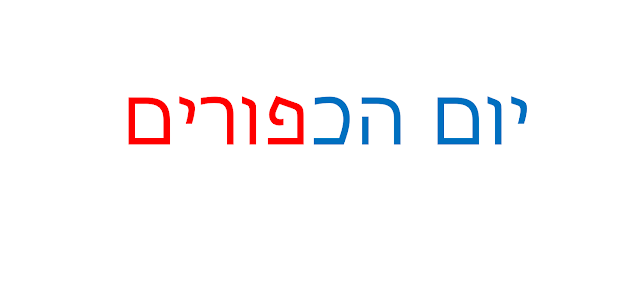
One of my “Purim pet peeves” is when someone gives a dvar Torah about the thematic relationship between the holidays of Purim and Yom ha’Kipurim on the sole basis of their similar sounding names. This claim rests on two pillars: (1) that both names contain the transliterated word “purim,” and (2) that the prefix “k-” means “like” in Hebrew. The claimant usually starts off with saying: “Yom ha’Kipurim is a yom (day) which is like Purim!” and then goes on to weave their own tapestry of ideas on that foundation.

This cute play on words can serve as a platform for an idea that stands on its own two feet, but anyone who thinks that this constitutes actual evidence hasn’t carefully read the megilah. The pasuk says:

In the first month, which is the month of Nisan, in the twelfth year of King Achashverosh, he cast a pur, which is a lottery, before Haman, from day to day and from this month to the twelfth month, which is the month of Adar. (Esther 3:7, translated by Neima Novetsky)

Why does the pasuk need to clarify what “pur” means? Ibn Ezra (ibid.) answers: because it’s a Persian word. Neima Novetsky, citing the BDB entry for פור, suggests that “pur” might stem from the Akkadian "puru," meaning “stone” or “lot.” Either way, “Purim” is not a Hebrew word, and therefore has no linguistic relationship to Yom ha’Kipurim – a Hebrew word from the root K.P.R. meaning “atone.”

Folk etymology aside, I was curious about the origins of the claim that there exists any sort of relationship between Purim and Yom ha’Kipurim. Despite the ubiquity of this notion, I barely found any references in the early sources. The Maharal of Prague (16th century) writes about this in his introduction to Ohr Chadash, referencing material from the medieval (11th century) Midrash Mishlei (9:2, Buber). This relationship is also mentioned in Tikkunei Zohar (21, 57b). Still, I wasn’t able to find any direct references in the works of Chazal, the Geonim, or the Rishonim … until yesterday. Rambam (Hilchos Megilah v’Chanukah 2:17) writes:

It is better for a person to be excessive in gifts to the poor than to be excessive in his meal and in sending [gifts] to his fellows, for there exists no greater or more glorious simchah (joy) than to bring simchah to the hearts of the poor, the orphans, the widows, and the converts, for one who brings simchah to the hearts of these downtrodden individuals resembles the shechinah (divine providence), as it is stated: “to bring life to the spirit of the lowly and to bring life to the heart of the oppressed” (Yeshaya 57:15).

Where do we hear this pasuk in Yeshayahu every year? In the haftarah of Yom ha’Kipurim. This makes Rambam the earliest source (to my knowledge) who relates the two holidays, albeit indirectly. Even though the application of this pasuk from Yeshayahu to Purim is a chidush (novel insight) on the Rambam’s part, caring for downtrodden individuals is undeniably one of the major themes of Purim. Moreover, Rabbi Joseph B. Soloveitchik (The Rav Thinking Aloud, by David Holzer, p.65) notes that it is always preferable to base a philosophical idea on a halachic (legalistic) source rather than an aggadic (homiletical) one:

With aggada, we are not sure that what we say is correct. We have no tradition as to the interpretation of the maxim, as we do in halachah. When testing philosophical ideas, it is thus preferable to introduce a halachic, rather than aggadic, motif.

Now that we’ve established that there is a thematic relationship between Purim and Yom ha’Kippurim which is reflected in halacha, the question remains: What is that relationship?
___________________________________________________________________________________
If you've gained from what you've learned here, please consider contributing to my Patreon at www.patreon.com/rabbischneeweiss. Alternatively, if you would like to make a direct contribution to the "Rabbi Schneeweiss Torah Content Fund," my Venmo is @Matt-Schneeweiss, and my Zelle and PayPal are mattschneeweiss at gmail.com. Even a small contribution goes a long way to covering the costs of my podcasts, and will provide me with the financial freedom to produce even more Torah content for you.

If you would like to sponsor a day's or a week's worth of content, or if you are interested in enlisting my services as a teacher or tutor, you can reach me at rabbischneeweiss at gmail.com. Thank you to my listeners for listening, thank you to my readers for reading, and thank you to my supporters for supporting my efforts to make Torah ideas available and accessible to everyone.

Be sure to check out my YouTube channel and my podcasts: "The Mishlei Podcast""The Stoic Jew" Podcast"Rambam Bekius" Podcast"Machshavah Lab" Podcast"The Tefilah Podcast"  For the full guide to all of my Torah content, click here

Friday, October 22, 2021

Parashas Vayeira: Avraham and Islam

Today's Torah content has been sponsored by someone who makes regular contributions, not only to the Torah content fund, but also to my shiurim.

Click here for a printer-friendly version of this article, and click here for an audio version.


Parashas Vayeira: Avraham and Islam

Avraham Avinu is distressed by Sarah’s instructions to banish Hagar and Yishmael from their home. Hashem addresses Avraham’s concerns:

God said to Avraham, “Do not let the matter of this youth and your maidservant be evil in your eyes. Whatever Sarah tells you, heed her voice, since through Yitzchak will offspring be considered yours. But also the son of the maidservant I will make into a nation, for he is your offspring.” (Bereishis 21:12-13)

The plain pshat of the statement “I will also make [Yishmael] into a nation” is that Yishmael’s offspring will be numerous, as the Rambam explains in his Iggeres Teiman. However, R’ Avraham ben ha’Rambam notes (ibid.) that this statement contains an allusion to another aspect of Yishmael’s destiny:

But also the son etc.this alludes to the revelation of Islam, [the adherents of which] believe in the Oneness of the Creator, [and who descend] from him (i.e. from Yishmael). How precise are His words, exalted is He: “I will make him [into a nation]” [implying] at a later time, after the revelation of the religion of Israel, and at a time of darkness for them, on account of their sins. “He told the end from the beginning” (cf. Yeshayahu 46:10).

R’ Avraham ben ha’Rambam saw the rise of the monotheistic Islam as a fulfillment of the promise to Avraham regarding Yishmael. When the offspring of Yitzchak are in “darkness … on account of their sins,” the offspring of Yishmael will raise the banner of Yichud Hashem (God’s Oneness), as their legacy from Avraham Avinu.

When taken in isolation, these words seem like an unqualified endorsement of Islam. Even more, they would seem to indicate R’ Avraham’s view that Islam is sanctioned by Hashem, Himself! However, this overly simplistic view ignores a comment that R’ Avraham made two pesukim earlier (ibid. 21:10):

The religious perfection that was promised to the offspring of Avraham would not include a partnership between the offspring of Yishmael and the offspring of Yitzchak, for [Yishmael] would not inherit a complete partnership with Yitzchak in terms of perfection. This is true, since the offspring of Yishmael would not be obligated in Torah, and even though they believed in it, they renounced it with claims of invalidation and emptied it with claims of modification and forgery. And even though they believe in the Oneness of the Creator, [their belief] in common with the offspring of Yaakov would only be during times of darkness for the offspring of Yitzchak. Therefore, Yishmael would not inherit perfection with Yitzchak.

R’ Avraham is referring here to the Islamic doctrine of Taḥrīf, by which the Muslims maintain that the Jews modified our Torah to remove references to Mohammad.

We see from here that Judaism’s stance on Islam is nuanced. Some of its features are good enough to be alluded to in Hashem’s promises to Avraham; other features are bad enough to remove Yishmael’s descendants from Avraham’s legacy of perfection. Likewise, the role that Islam will play in the unfolding of Hashem’s plan is unclear. Many Jews have been oppressed and killed at the hands of Muslims – and yet, it is impossible for us to see the big picture from our limited vantage point. Rambam expresses this truth in Hilchos Melachim u’Milchamos 11:4:

But the plans of the Creator of the Universe are not within the capacity of man to grasp, for our ways are not His ways and our thoughts are not His thoughts. All these matters of Jesus of Nazareth and the Ishmaelite who arose after him – all of these have only straightened the path for the Melech ha'Moshiach (King Messiah), and prepared the world to serve Hashem together, as it is stated: "then I will transform all the peoples, that they all will call upon the name of Hashem and serve Him with one purpose" (Tzephania 3:9).
___________________________________________________________________________________
If you've gained from what you've learned here, please consider contributing to my Patreon at www.patreon.com/rabbischneeweiss. Alternatively, if you would like to make a direct contribution to the "Rabbi Schneeweiss Torah Content Fund," my Venmo is @Matt-Schneeweiss, and my Zelle and PayPal are mattschneeweiss at gmail.com. Even a small contribution goes a long way to covering the costs of my podcasts, and will provide me with the financial freedom to produce even more Torah content for you

If you would like to sponsor an article, shiur, or podcast episode, or if you are interested in enlisting my services as a teacher or tutor, you can reach me at rabbischneeweiss at gmail.com. Thank you to my listeners for listening, thank you to my readers for reading, and thank you to my supporters for supporting my efforts to make Torah ideas available and accessible to everyone. 

Be sure to check out my YouTube channel and my podcasts: "The Mishlei Podcast""The Stoic Jew" Podcast"Rambam Bekius" Podcast"Machshavah Lab" Podcast"The Tefilah Podcast"  For the full guide to all of my Torah content, click here

Friday, October 8, 2021

Parashas Noach: Migdal Bavel and the Hindu Account of the Mabul

This week's Torah content has been sponsored by an anonymous donor, in memory of her grandmother, Golda Henya bat Devora a"h.
 
Click here for a printer-friendly version of this article, and click here for an audio version.


Parashas Noach: Migdal Bavel and the Hindu Account of the Mabul

Rashi (Bereishis 11:1) mentions three possible motives of the Dor Ha'Haflagah (Generation of the Dispersion) for building the tower. According to his third explanation, the people said: "Once every 1656 years, the firmament becomes unstable, as it did in the time of the Mabul (Flood). Come, let us make supports for it!" (Bereishis Rabbah 38:6). On a basic level, Chazal are teaching us that the Dor Ha'Haflagah denied that the Mabul was Divine punishment for the sinfulness of mankind; likewise, they denied Hashem’s promise that He would never bring such destruction again. Instead, they viewed the Mabul as a natural, cyclical phenomenon – one which had nothing to do with morality, and which could be averted by taking the proper technological precautions.

Up until now, I assumed that this midrash was mere homiletics, having nothing to do with historical fact. After all, how could Chazal know what the Dor Ha'Haflagah really thought? This year, however, I discovered that there really were people who believed this about the Mabul! I’m currently in the middle of reading Rabbi on the Ganges: A Jewish-Hindu Encounter, by Rabbi Dr. Alan Brill. The author summarizes the Hindu-Indian account of the Mabul, as recorded in the Puranas, a sacred text which was written down during the Gupta era (350-550 CE):

The Puranas present many related versions of the flood story, which all bear an uncanny resemblance to the biblical flood story. All of these accounts agree that the flood story’s protagonist is a man named Manu. Like Noah, Manu is described as a virtuous individual “who, by penances and prayers, had won the favor of the lord of heaven” (Shatapatha Brahmana I:8 Matsya Purana). Both Manu and Noah had three sons before the flood – Charma, Sharma, and Yapeti, and Ham, Shem, and Japheth, respectively. In Genesis, the cause of humanity’s destruction is that the “wickedness of man was great in the earth” (ch 6). In the story of Manu, however, the destruction of the world was part of the natural order of things, rather than as a divine punishment. (p.112)

Apparently, the cyclical flood theory wasn’t merely a didactic element of a midrashic fiction, but was a real belief held by actual human beings! Let us compare the response of the Dor Ha’Haflagah as described by the midrash with the Hindu response described in the Puranas. Chazal rightly condemn the Dor Ha’Haflagah for their denial of the true cause of the Mabul. They knew what Noach had told them based on nevuah and rejected it anyway. In contrast, the Hindus didn’t have access to a living navi to frame the event from a true Divine perspective. Where does that leave us today? We also don’t have a living navi. How should we respond to a cyclical natural disaster?

The answer lies in the Rambam’s codification (Hilchos Taaniyos 1:1-3) of the Jewish response to tzarah (catastrophe):

It is a positive mitzvah of the Torah to cry out and to sound the trumpets on every tzarah that befalls the community … such as drought, epidemic, locusts, and the like … This principle is one of the darchei teshuvah (ways of repentance), that at a time of the onset of an affliction, when the [people] cry out and sound the trumpets, everyone will know that it was because of their evil conduct that this bad occurrence befell them … But if they do not cry out and do not sound the trumpets, but instead say, “This is minhago shel olam (a natural event) which befell us, and this affliction is a mikreh (chance occurrence)” - behold, this is a derech achzarius (way of cruelty) and will cause them to cling to their evil conduct, and [this] affliction and others will increase.

The Rambam doesn’t differentiate between cyclical and non-cyclical catastrophes. Apparently, it doesn’t matter whether the tzarah follows a natural cycle or not. What matters is whether we respond to it by doing teshuvah or whether we dismiss it as “the way of the world” and persist in our behavior. Every tzarah ought to prompt us to engage in teshuvah, no matter what the cause or frequency. In this framework, even if the Mabul were a cyclical disaster – as believed by the Dor Ha'Haflagah and the Hindus – it wouldn’t make a difference. Even without access to a navi today, we can know with 100% certainty that the correct response to any tzarah is teshuvah.
___________________________________________________________________________________
If you've gained from what you've learned here, please consider contributing to my Patreon at www.patreon.com/rabbischneeweiss. Alternatively, if you would like to make a direct contribution to the "Rabbi Schneeweiss Torah Content Fund," my Venmo is @Matt-Schneeweiss, and my Zelle and PayPal are mattschneeweiss at gmail.com. Even a small contribution goes a long way to covering the costs of my podcasts, and will provide me with the financial freedom to produce even more Torah content for you

If you would like to sponsor an article, shiur, or podcast episode, or if you are interested in enlisting my services as a teacher or tutor, you can reach me at rabbischneeweiss at gmail.com. Thank you to my listeners for listening, thank you to my readers for reading, and thank you to my supporters for supporting my efforts to make Torah ideas available and accessible to everyone. 

Be sure to check out my YouTube channel and my podcasts: "The Mishlei Podcast""The Stoic Jew" Podcast"Rambam Bekius" Podcast"Machshavah Lab" Podcast"The Tefilah Podcast"  For the full guide to all of my Torah content, click here

Tuesday, October 5, 2021

Parashas Bereishis: (How) Did Hashem Speak to Kayin

This week's Torah content has been sponsored by an anonymous donor, in memory of her grandmother, Golda Henya bat Devora a"h. 

Click here for a printer-friendly version of this article, and click here for an audio version.

Artwork: Mind Grind, by Daarken


Bereishis: (How) Did Hashem Speak to Kayin

According to the pshat (plain meaning of the text), Hashem addresses Kayin three times: “Hashem said to Kayin, ‘Why are you angry etc.’” (Bereishis 4:6-7), “Hashem said to Kayin, ‘Where is Hevel, your brother?’ etc.” (ibid. 4:9-12), and “Hashem said to him, ‘Therefore, anyone who kills Kayin’ etc.” (ibid. 4:15).

The question is: How? According to the Rambam (Hilchos Yesodei ha’Torah Chapter 7), Hashem only grants nevuah to those who are on the highest level of perfection. Kayin certainly falls short of the requisite level of ethical perfection, as indicated by the rejection of his korban, his reaction of anger and dejection, his decision to murder his brother, and his denial of culpability. Regarding his intellectual perfection: some commentators learn that Kayin’s act of murder and subsequent denial indicate that he harbored false beliefs about Divine Omniscience. Midrashic commentaries ascribe to him additional heretical beliefs. Kayin is not exactly navi material.

Radak wrote a full commentary on Sefer Bereishis which, unfortunately, isn’t very well-known because it’s not printed in the standard Mikraos Gedolos. Even less well-known is his peirush ha’nistar (esoteric commentary) on Bereishis 2:7 through 5:1, which is available on AlHaTorah.org. It is in this esoteric commentary (4:6-7) that Radak suggests a radical answer to our question:

Hashem said to Kayin: the will of God - namely, the human intellect - responded to [Kayin’s] wrath and anger by saying to him, "Why did you get angry and why did you become crestfallen?"

Isn’t it true that if you improve: his intellect taught him the path of teshuvah.

Seemingly, according to Radak’s comments, Hashem didn't speak to Kayin at all! Rather, it was Kayin’s own intellect – which expresses the will of God – that rebuked him for his anger and enlightened him about teshuvah. This is reminiscent of the Rambam’s second explanation (Hilchos Teshuvah 6:5) of what David ha’Melech meant when he said: “Good and upright is Hashem; therefore, He instructs sinners on the path” (Tehilim 25:8):

[This means that] He implanted within them (i.e. sinners) the capacity to learn and to understand, for this tendency is within every human being, namely, that as long as he is drawn on the paths of chochmah (wisdom) and tzedek (righteousness), he will desire them and pursue them. This is what the Sages meant by, “One who comes to be purified will be assisted” – meaning to say, he will find himself assisted in the matter.

Now, before we get carried away with the implications of our findings, we contextualize the Radak’s comments within the mission statement of his esoteric commentary. On Bereishis 2:7 he writes:

The “adam” mentioned in the pasuk ["Hashem-Elokim formed the adam" (Bereishis 2:7)] refers in the nigleh (non-esoteric reading) to Adam ha'Rishon, but in the nistar (esoteric reading) it refers to the name of the species. Both are true, but the nigleh is for the masses and the nistar is for the individuals who are the excellent among the masses.

In other words, Radak doesn’t deny the literal truth of the pshat, according to which Hashem did speak with Kayin. Unfortunately, this means that Radak esoteric commentary ultimately does not answer our original question.

And yet, Radak’s esoteric reading opens an intriguing can of worms. Does the Torah ever use Divine communication as a narrative device rather than as a factual account of prophetic communication? Rambam is certainly comfortable with giving non-literal explanations of Divine speech, as cited above, and as he writes about in the Moreh ha’Nevuchim 2:48 and in 3:22. While such interpretations are not to be posited gratuitously, it is noteworthy that such an approach exists and can be found in the writings of mainstream commentators.
___________________________________________________________________________________
If you've gained from what you've learned here, please consider contributing to my Patreon at www.patreon.com/rabbischneeweiss. Alternatively, if you would like to make a direct contribution to the "Rabbi Schneeweiss Torah Content Fund," my Venmo is @Matt-Schneeweiss, and my Zelle and PayPal are mattschneeweiss at gmail.com. Even a small contribution goes a long way to covering the costs of my podcasts, and will provide me with the financial freedom to produce even more Torah content for you

If you would like to sponsor an article, shiur, or podcast episode, or if you are interested in enlisting my services as a teacher or tutor, you can reach me at rabbischneeweiss at gmail.com. Thank you to my listeners for listening, thank you to my readers for reading, and thank you to my supporters for supporting my efforts to make Torah ideas available and accessible to everyone. 

Be sure to check out my YouTube channel and my podcasts: "The Mishlei Podcast""The Stoic Jew" Podcast"Rambam Bekius" Podcast"Machshavah Lab" Podcast"The Tefilah Podcast"  For the full guide to all of my Torah content, click here

Friday, October 1, 2021

Does Hashem Actually Care What We Call Shemini Atzeres?

This week's Torah content has been sponsored by an anonymous donor, in memory of her grandmother, Golda Henya bat Devora a"h.

Disclaimer: I usually try to make my articles as accessible as possible by translating Hebrew and Aramic terms and providing background information. However, due to the halachic nature of this topic and the fact that it is a one-page article, I've decided not to provide such explanations. 

Click here for a printer-friendly version of this article, and click here for an audio version.


Does Hashem Actually Care What We Call Shemini Atzeres?

I would describe myself as somewhat of a “nusach ha’tefilah geek.” I enjoy researching variations in different nuschaos and attempting to understand their causes and implications. For this reason, my chavrusa and I spent an inordinate amount of time this past Shemini Atzeres delving into the question of how one is supposed to refer to the name of the holiday when mentioning it in tefilah, birkas ha’mazon, and kiddush. Do we say “Yom Shemini Chag ha’Atzeres” (Tur / Shulchan Aruch), “Yom Shemini Atzeres” (Minhagim / Rama), “Yom Shemini Atzeres ha’Chag” (Rashal / Taz), “Yom Chag Shemini Atzeres” (Rambam), or something else?

Our learning prompted us to probe deeply into the very nature of Shemini Atzeres and its relationship to the Chag ha’Sukkos. We emerged with a clearer grasp of the multifaceted halachic character of this unique holiday than we previously had. From the standpoint of enhancing our Yom Tov, this was definitely a worthwhile sugya to take up. And yet, a little over an hour into our learning, I found myself bothered by what some might consider to be an irreverent question: Does Hashem actually care what I call Shemini Atzeres in my tefilah and berachos?

Let me be very clear about what I am asking and what I am not asking. I am not asking, “What's the point of davening at all? What does Hashem get out of our tefilos?” Hashem doesn’t get anything out of our tefilos. Nothing we do affects Him. Tefilah, like all mitzvos, is entirely for our own benefit. I am also not asking, “Why do variants in the nusach ha’tefilah matter?” The Anshei Kneses ha’Gedolah included the greatest chachamim and neviim of their era; it would be both halachically irresponsible and intellectually foolish to deviate from the carefully crafted nusach they established in their unparalleled wisdom. Furthermore, I am not bothered by nusach variants which reflect different ideas, different interpretations, different sources, different emphases, or different minhagim.

My question here is far narrower and is based on an assumption. My assumption is that the Anshei Kneses ha’Gedolah did NOT dictate a specific wording for how we refer to Shemini Atzeres. Rather, they established the halacha of me’ein ha’meora (i.e. the requirement to mention the name of the Yom Tov on the day itself) and they also instructed us to single out Shemini Atzeres as separate from the Chag ha’Sukkos, but they didn’t formulate the precise manner in which we ought to identify the Yom Tov when implementing these halachos. If this assumption is true, then do all these hairsplitting arguments mentioned by the poskim actually matter? Why should we care which version we say if the Anshei Kneses ha’Gedolah didn’t care enough to tell us?

An answer to my question came from a pasuk we read on Shabbos Chol ha’Moed: “Do not be rash with your mouth, and do not let your heart be hasty to utter a word before God; for God is in heaven and you are on earth; therefore, let your words be few” (Koheles 5:1). The Ibn Ezra uses this as a springboard for a lengthy polemic against certain paytanim and the use of piyutim in davening. He opens with the following:

[Utter words before God] only if you understand their meaning … Know that God stands over you. He sees you and hears your words … Therefore, a person who prays is obligated to guard the openings of his mouth; he should contemplate in his heart that he is standing before the King of kings, Who holds the power to kill and to grant life.

If you knew you were going to make an appearance before a king who had the power over life and death, you would certainly make sure you spoke with the highest level of precision and understanding you could muster. To neglect to do so would indicate a lack of reverence, no matter how trifling the content of your speech. Thus, even if the Anshei Kneses ha’Gedolah didn’t establish a particular nusach for how we refer to Shemini Atzeres in our davening, this doesn’t exempt us from doing our due diligence to choose our words with as much understanding and precision as we can, thereby reinforcing our recognition that we are standing in awe and fear before the King of kings. It's not what we call Shemini Atzeres that matters. It's the fact that we care how we speak before God.
___________________________________________________________________________________
If you've gained from what you've learned here, please consider contributing to my Patreon at www.patreon.com/rabbischneeweiss. Alternatively, if you would like to make a direct contribution to the "Rabbi Schneeweiss Torah Content Fund," my Venmo is @Matt-Schneeweiss, and my Zelle and PayPal are mattschneeweiss at gmail.com. Even a small contribution goes a long way to covering the costs of my podcasts, and will provide me with the financial freedom to produce even more Torah content for you

If you would like to sponsor an article, shiur, or podcast episode, or if you are interested in enlisting my services as a teacher or tutor, you can reach me at rabbischneeweiss at gmail.com. Thank you to my listeners for listening, thank you to my readers for reading, and thank you to my supporters for supporting my efforts to make Torah ideas available and accessible to everyone. 

Be sure to check out my YouTube channel and my podcasts: "The Mishlei Podcast""The Stoic Jew" Podcast"Rambam Bekius" Podcast"Machshavah Lab" Podcast"The Tefilah Podcast"  For the full guide to all of my Torah content, click here