Showing posts with label Yetzias Mitzrayim. Show all posts

Thursday, April 14, 2022

Tzfarde’a: The Plague That Lasted Forever

The content on this podcast has been sponsored by my Patrons on Patreon. The total cost of maintaining my five podcasts in 2021 amounted to over $2000 - all of which would have come out of my own pocket were it not for your generosity. Thank you for helping me make Torah ideas available and accessible to everyone!

Click here for a printer-friendly version of this article, and click here for an audio version.
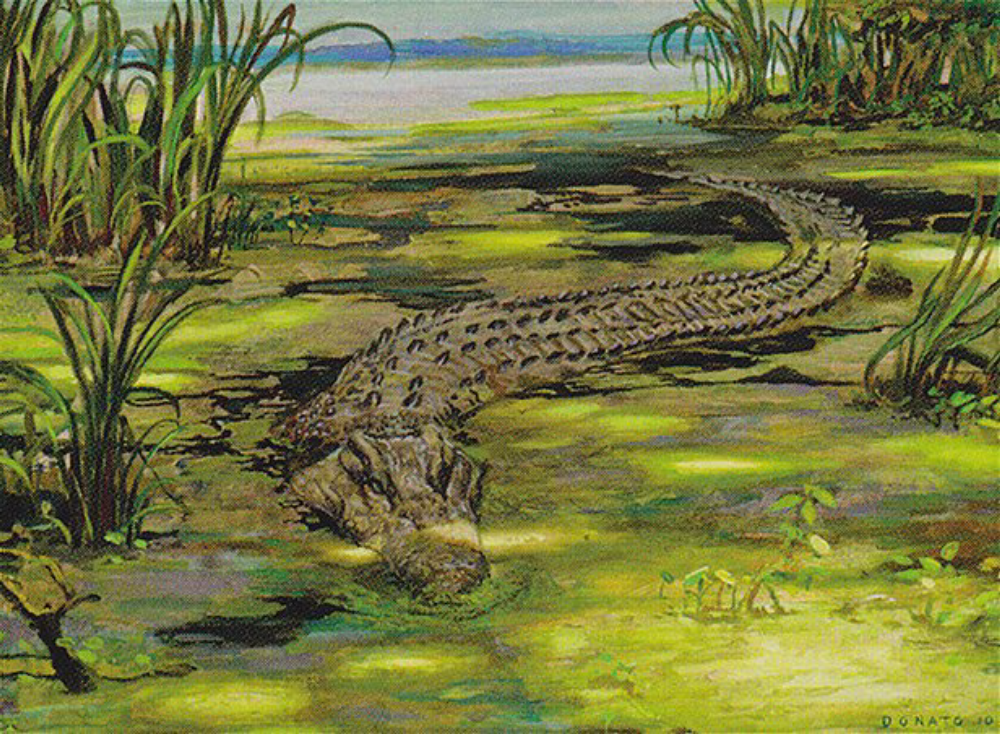
 
Artwork: Lurking Crocodile, by Donato Giancola

Tzfarde’a: The Plague That Lasted Forever

Ask the average Jew to identify the species involved in the second of the ten plagues, and they’ll likely answer “frogs.” However, a few commentators interpret the word “tzfarde’a” to mean “crocodiles.” Saadia Gaon bases his interpretation on the account of the plagues in Sefer Tehilim: “He sent wild beasts into them which devoured them, and tzfarde’a which destroyed them” (Tehilim 78:45). He explains: “I interpret tzfarde’a as crocodiles because frogs don’t kill, whereas this [tzfarde’a mentioned in the pasuk] kills.” Ramban (Shemos 10:14) cites this opinion in the name of Rabbeinu Chananel. Ibn Ezra (ibid. 7:27, Second Commentary) brings it up as a possibility which he ultimately rejects. Rabbeinu Bachya (ibid. 10:19) also mentions this view.

The most emphatic crocodile advocate is the Abravanel, who marshals a number of proofs – too many to paraphrase in a 1-page article. His main argument is based on Moshe’s statement: “The crocodiles will depart from you and from your houses, and from your servants and your people; only in the River will they remain” (ibid. 8:7). The Abravanel writes: “How could [Moshe] say ‘only in the River will they remain,’ which indicates that they would remain exclusively in the Nile, when croaking frogs are found throughout all the rivers of Egypt, and also in all the streams and ponds in the world?” He acknowledges that crocodiles eventually made their way outside of the borders of Egypt, but staunchly maintains that prior to the plague of tzfarde’a, crocodiles were not present in the Nile, and were only brought there by the plague. He then goes on to spell out the implications of the pasuk:

Moshe said, "only in the River will they remain" because he saw that Paroh suffered greatly from the crocodiles, and therefore, in order to intimidate him, he said, "only in the River will they remain" – in other words, so that they will occasionally come up by the will of the Creator (blessed is He) as a reminder that the great crocodiles came into the Nile River by the decree of Ha'Kadosh Baruch Hu as a punishment for the Egyptians; for this reason, He wanted the crocodiles to remain in the river of Egypt as a reminder, so that the offspring born to the later generations would know that this is the tzfarde'a that Hashem (blessed is He) brought to the Nile to destroy the Egyptians. This is why Moshe repeated, "only in the River shall they remain," for this was a new phenomenon, that the crocodiles would remain perpetually in the river of Egypt, in the manner of, "a memorial He made for His wonders" (Tehilim 111:4).

We Jews memorialize the events of Yetzias Mitzrayim through the laws of the Torah: Pesach, matzah, maror, and sippur (telling the story). According to the Abravanel, the Egyptians also received a memorial – one that was preserved in the laws of nature: the perpetual presence of crocodiles in the Nile. This stands to reason: we were one intended audience of the plagues: “in order that you recount in the ears of your children and your grandchildren how I made a mockery of Egypt, and the signs that I placed in their midst, and you shall know that I am Hashem” (Shemos 10:2). Egypt was the other audience: “in order to show you My power, and in order that My Name should be proclaimed throughout all the land” (ibid. 9:14). We received reminders for all generations in the form of mitzvos; so too, Egypt received a reminder for all generations in the form of a lasting plague.

Sforno (ibid. 8:6) also holds by the crocodile theory, but offers a different explanation as to why they remained in the Nile after the plague was removed from Paroh and his people:

in order that you know that there is none like Hashem, our God – for there is no power that can introduce a new change in nature except for a limited time, but the crocodiles which [remained] in the River [resulted from] a [permanent] change in the nature of the River.

In short, the Abravanel held that the purpose of this everlasting plague was for future generations – to preserve the fear of Hashem, and to remind them of the plagues. Sforno held that the purpose of this perpetual plague was for the present – to demonstrate that only the Creator can introduce a permanent change in a natural entity.

___________________________________________________________________________________

If you've gained from what you've learned here, please consider contributing to my Patreon at www.patreon.com/rabbischneeweiss. Alternatively, if you would like to make a direct contribution to the "Rabbi Schneeweiss Torah Content Fund," my Venmo is @Matt-Schneeweiss, and my Zelle and PayPal are mattschneeweiss at gmail.com. Even a small contribution goes a long way to covering the costs of my podcasts, and will provide me with the financial freedom to produce even more Torah content for you.

If you would like to sponsor a day's or a week's worth of content, or if you are interested in enlisting my services as a teacher or tutor, you can reach me at rabbischneeweiss at gmail.com. Thank you to my listeners for listening, thank you to my readers for reading, and thank you to my supporters for supporting my efforts to make Torah ideas available and accessible to everyone.

Be sure to check out my YouTube channel and my podcasts: "The Mishlei Podcast""The Stoic Jew" Podcast"Rambam Bekius" Podcast"Machshavah Lab" Podcast"The Tefilah Podcast"  For the full guide to all of my Torah content, click here

Friday, April 22, 2016

Lessons in Hashgachah for the Four Sons

Click here for a printer-friendly version of this blog post.

Originally published in April 2012.

Artwork: Monastery Mentor, by Magali Villeneuve 
Lessons in Hashgachah for the Four Sons

One of the "classic" questions on the Arbaah Banim (Four Sons) section of the Hagadah is: Why do we use the same pasuk to the rasha (evil son) and the eino yodea li'shol (the son who doesn't know to ask)? The Orchos Chaim [1] offers a bold answer with some interesting implications for chinuch (child education). He writes:
Apparently, the reason [we use the same pasuk] is because it is proper to give the same answer to the rasha and the eino yodea li'shol. The redemption in Egypt was done through miracles that involved changes in nature. Hashem will only changes nature for the sake of the chasidim (eminent individuals) in the generation - either in the merit of their Torah, if they are chachamim (wise individuals), or in the merit of their proper actions and their uprightness, if they walk with Him b'tom levav (wholeheartedly) and are careful in their fulfillment of mitzvos aseh (positive commandments) and in keeping mitzvos lo taaseh (negative commandments). These are the merits of the chacham (wise son) and the tam (wholehearted son).

However, it is well known that the rasha is not worthy [of Divine intervention], nor is the individual who is lax in the actions which he does for the sake of God and who behaves like an animal - namely, the eino yodea li'shol. Without a doubt, such an individual is not on the level where Hashem will change nature on his behalf in order to save him. For this reason, even this individual (i.e. the eino yodea li'shol) falls under the answer of "for the sake of this, Hashem acted on my behalf etc." which means to say, "in my merit, but not in your merit, since you do not contemplate the ways of Hashem and His Torah and His mitzvos."

All of this comes to teach us that a person should tell his son to strengthen his involvement in Torah by day and by night, and to be scrupulous and wholehearted in his observance of mitzvos. Then, and only then, will he be among those for whom Hashem changes nature in order to save them and redeem them. 
According to the Orchos Chaim, the overarching lesson of the Arbaah Banim is to teach children the criteria for meriting hashgachah pratis (individual divine providence). According to the Orchos Chaim, there are two categories of merit: (1) involvement in Torah and chochmah, and (2) scrupulous and wholehearted observance of mitzvos. The chacham and the tam possess this merit, and if they had been in Egypt at the time of the redemption, they would have been saved on account of this merit.

The rasha and the eino yodea li'shol lack these types of merit. The eino yodea li'shol is not careful in his observance of mitzvos and lives "like an animal," and the rasha casts off the yoke of mitzvos altogether (see the Orchos Chaim's commentary). Consequently, if they had been in Egypt at the time of the redemption, their merit would be insufficient to warrant hashgachah pratis, and they would not have been redeemed. This is the intent of the response of "for me - but not for him" in the Hagadah. This response is not a snide retort, but is intended as a lesson in how the hashgachah operates.

According to the Orchos Chaim, the Hagadah is urging us to instill these ideas about the hashgachah at an early age, in order to motivate our children in the pursuit of chochmah and the observance of mitzvos. This might be a lo lishmah (extrinsic motive) for being involved in Torah and mitzvos, but lo lishmah is a necessary precursor to lishmah, as Chazal say: "a person should always involve himself in Torah and mitzvos even she'lo lishmah, for from lo lishmah he will come to lishmah." And what better exemplification of hashgachas Hashem in action than Yetzias Mitzrayim!

[1] Rabbeinu Aharon ben Yaakov ha'Kohen, Orchos Chaim: Seder Leil ha'Pesach

Chametz - Why So Serious?

This is essentially a walk-through of the famous Ramban at the end of Parashas Bo. Originally published in April 2014.

Click here for a printer-friendly version of this blog post.

Artwork: The Basket of Bread, by Salvador Dali


Chametz - Why So Serious?

“Why can’t we eat chametz on Pesach?” “Why aren't we permitted to own chametz on Pesach?” “Why do we have to search our homes for chametz on Erev Pesach?” These are among the most common questions I receive from my students at this time of the year. However, the most important questions that my students ask me year-round are: “How do we know that God exists?” and “How do we know that Judaism is true?” As it so happens, the answers to both sets of questions are more related than one might think.

The mitzvos associated with chametz are inherently tied to the mitzvah to remember Yetzias Mitzrayim (the Exodus from Egypt): 
Remember this day that you went forth from Egypt, from the house of slaves, for with a strong hand Hashem took you out from there, and you shall not eat chametz … For a seven-day period you shall eat matzos, and on the seventh day there shall be a festival to Hashem. Matzos shall be eaten throughout the seven-day period; no chametz may be seen in your possession, nor may leaven be seen in your possession in all your borders. And you shall tell your son on that day, saying, “It is because of this that Hashem acted on my behalf when I left Egypt.” And it shall be for you a sign on your arm and a reminder between your eyes – so that Hashem’s Torah may be in your mouth – for with a strong hand Hashem removed you from Egypt (Shemos 13:3-9).
According to the plain pshat, there is one central reason for the mitzvos of chametz and matzah: to remind us of the events of Yetzias Mitzrayim. This raises a number of additional questions. Why does the Torah take such extreme measures to remind us of Yetzias Mitzrayim? Why force us to go through all the trouble to distance ourselves from chametz? Why impose the harsh penalty of kareis (spiritual excision) for eating chametz on Pesach? Moreover, why are there so many mitzvos which serve this same purpose? Shabbos, tefillin, mezuzah, tzitzis, Shema, Sukkos – there are dozens of mitzvos that commemorate Yetzias Mitzrayim! Why the redundancy?

The Ramban (ibid. 13:16) answers these questions in detail. He begins by stating that ever since the time of Enosh there have been people who have denied or doubted the reality of Hashem’s hashgachah (providence), His omniscience, and even His Existence. How can these doubts be removed? Ramban explains:
When God favors a congregation or an individual and does a miracle which deviates from the pattern of the world and its nature, the refutation of all these [false] beliefs is clear to all. Such a wondrous miracle indicates (a) that the universe has a God, (b) Who brought it into existence, (c) Who has knowledge of particulars, (d) Who providentially supervises [mankind], and (e) Who is Omnipotent; (f) and when this miracle is declared beforehand by a prophet, the reality of prophecy is also proven, namely, that God speaks with man and reveals His secrets to His servants, the prophets. Through this the entire Torah becomes firmly established.
Hashem orchestrated the miraculous Exodus from Egypt in order to demonstrate these fundamental truths to mankind. Moshe Rabbeinu repeatedly emphasizes the educational character of the makkos: In order that you should know that I am Hashem in the midst of the earth” (ibid. 8:18); “In order that you should know that the earth belongs to God,” (ibid. 9:12); “In order that you should know that there is none like Me in all the earth” (ibid. 9:14) and so on. Ramban explains that “the Egyptians either denied or were in doubt about all of these things. Thus, the great signs and wonders are trustworthy witnesses to the reality of the Creator and the entire Torah.”

How do these miracles which occurred thousands of years ago accomplish their goals today? Ramban explains:
Since God will not perform a sign and wonder in every generation for the eyes of every evildoer or heretic, He commanded us to make continual reminders of that which we witnessed with our eyes, and to transmit the matter to our children and our children’s children unto the last generation. He was exceedingly stringent regarding this matter, to the extent that He instituted the liability of kareis for eating chametz and neglecting the Pesach-sacrifice, and required us to write about the entire matter of the signs and wonders, which we witnessed, on our arms and between our eyes, and also to write them on the doorposts of our houses, and to mention it verbally in the morning and the evening and to make a sukkah every year, and many other mitzvos in remembrance of the Exodus from Egypt – all for the sake of serving as testimonial of the wonders for all generations so that we do not forget them and so that there shouldn't be any room for the mouths of heretics to deny the true ideas of God
Miracles verify the fundamentals of Torah. In order to establish these truths once and for all, Yetzias Miztrayim was carried out in an impressively miraculous manner in the eyes of multitudes. To ensure that these miracles wouldn't be forgotten, Hashem commemorated them in a variety of mitzvos. These mitzvos are called “eidos” (lit. “testimonies”) because they “bear witness” to the events which prove the foundational principles of Torah. Ramban concludes with a dramatic example of how a little mitzvah can be utilized to achieve such a lofty goal:
Thus, if a person buys a mezuzah for a penny, affixes it do his doorpost, and contemplates its content, he has ipso facto affirmed [belief in] the creation of the world and the omniscience and providence of the Creator, as well as prophecy, and has conviction in all of the fundamentals of the Torah, and all of this in addition to acknowledging the exceedingly great kindness of the Creator toward those who fulfill His will, that He took us out of slavery to freedom, which is a great honor to the merit of our forefathers who desired to be in awe of His name. Therefore, the Sages said: “Be as careful with a light mitzvah as with a strict mitzvah,” for all of them are exceedingly desirable and beloved, for at all times a person will acknowledge God through them.
Now we can understand the severity of the prohibitions of chametz. To put it simply: Hashem created the commemorative mitzvos of Pesach to have an impact, since their “testimonial” objectives are only achieved when we contemplate them. Although we have mitzvos to remind us of Yetzias Mitzrayim throughout the entire year, Pesach is the time of year when this theme takes center stage and becomes the focus of our learning. The prohibitions of chametz are designed to be as “in your face” (for lack of a better term) as mitzvos can get. They necessitate major changes in our day-to-day routines before, during, and after Pesach. It is impossible for any halacha-observant Jew to be oblivious to the prohibitions associated with chametz. The reason for all of this is to make sure that we think about and discuss the philosophical implications of the miraculous events which these mitzvos commemorate, thereby strengthening our conviction in Hashem and His Torah. 

Were it not for the demanding strictures of chametz, the reality of the national memory of Yetzias Mitzrayim would continually diminish over the centuries and millennia, and the fundamental proofs would be lost along with them.

Thursday, April 21, 2016

The Eleventh Plague

Originally published in April 2012. Click here for a printer-friendly version of this blog post.

Artwork: Necrotic Plague, by Jaime Jones


The Eleventh Plague

Towards the end of the Arami Oved Avi section of the Hagadah, we encounter a somewhat puzzling drashah:
With a strong hand – this refers to the dever (pestilence), as it is stated: “Behold! – the hand of Hashem shall strike your cattle which are in the field, the horses, the donkeys, the camels, the herds, and the flocks – a very severe pestilence” (Shemos 9:3).
According to the plain pshat, as seemingly indicated by the pasuk cited in the Hagadah, this is a reference to makkas dever: the plague of pestilence that killed the Egyptian livestock, which was the fifth of the ten makkos.

In this post we would like to take up two questions: 
  1. Why does the Hagadah single out dever from among the other makkos? There are only two other drashos which mention specific makkos: the first drashah in this set, which references makkas bechoros (the death of the firstborns), and the last drashah in this set, which references makkas dahm (blood). We but why does the Hagadah then backtrack to dever, which was a "lesser" makkah and chronologically preceded makkas bechoros?
  2. What essential idea of Yetzias Mitzrayim does this drashah express? I am working with the premise that since we are telling our sipur Yetzias Mitzrayim (the account of the Exodus from Egypt) through these drashos, then each of these drashahos must convey an essential idea about Yetzias Mitzrayim. What fundamental idea is expressed here? 
The most intriguing explanation I've encountered from the Rishonim is that of the Orchos Chayim, in his commentary on the Hagadah:
The explanation of this is as follows: this refers not only to the livestock disease, but to the human epidemic as well, for there wasn't a single one of the makkos that was not accompanied by an epidemic, as it is stated, "Behold, I will smite all of your borders" (Shemos 7:27); "Only this death" (ibid. 10:17); "all of My plagues" (ibid. 9:14). This was expressed through the term "hand," as it is written: "Behold, the hand of Hashem is upon etc."
According to the Orchos Chayim, the drashah in the Haggadah does not refer exclusively to livestock disease, which was but one of the ten makkos. Rather, it refers to the human epidemic which accompanied all of the other makkos. This makkah is only alluded to in the pesukim, never discussed openly (which is one of the reasons why you may never have heard of it). Other midrashim make reference to this dever as well. For instance, Shemos Rabbah 10:2 says:
R' Yehoshua ben Levi said: [in] every makkah that was visited upon the Egyptians, a contagion crept along with it, as it is said, "Behold, I will smite" - and the word "behold" refers to the epidemic, as it says: "Behold, the hand of Hashem is upon your cattle."
This answers our first question: Why does the Hagadah single out dever from among the other makkos? The answer is: It doesn't! The Hagadah is not referring to the makkah of dever per se, but to the "background makkah" of human disease. 

This raises a new question: What was the purpose of this human epidemic? Weren't the ten makkos enough? Furthermore, the Torah itself seems to support the idea that the other makkos were primary, since the narrative explicitly recounts the ten makkos but only alludes to the "background dever." Also, we still haven't answered our second original question: What essential idea of Yetzias Mitzrayim does this drashah teach us?


I believe the clue which will allow us to answer these questions is contained in the first chapters of Sefer Iyov. The story of Iyov begins with a description of Iyov as "wholesome and upright, he feared God and shunned evil." He had a large and happy family and was "the wealthiest man of all the people in the east." One day, the satan posed a challenge to Hashem, saying:
"Is it for nothing that Iyov fears God? Have You not set a protective wall about him, about his household, and about everything he owns from all around? You have blessed his handiwork, and his livestock have spread throughout the land. But send forth Your hand and touch everything that is his, [and see] if he does not blaspheme You to Your face" (Iyov 1:9-11).
Hashem accepts the challenge (so to speak) and grants the satan dominion over all of Iyov's property on the one condition: "do not send forth your hand against his [person]!" (ibid. 12). The satan goes forth and, in a single day, destroys Iyov's wealth, servants, and children. In spite of all the loss, Iyov remains steadfast in his acceptance of Hashem's decree. Hashem points this out to the satan, but the satan replies:
"Skin for the sake of skin! Whatever a man has he would give up for his life! But send forth Your hand and touch his bone and his flesh, and surely he will blaspheme You to Your face!" (ibid. 2:4-5).
Hashem grants the satan permission to afflict Iyov's body:
The Satan departed from the presence of Hashem and afflicted Iyov with severe boils, from the soles of his feat to the top of his head. He took a potsherd to scratch himself with, and he sat amid the ashes (ibid. 2:7-8).
At first, Iyov didn't give in - at least, not in his outward speech or actions. "Despite everything, Iyov did not sin with his lips" (ibid. 10) - though, as Chazal teach, he did sin in his heart, even though he didn't express it. Finally, when his friends come to visit him, after sitting in silence for seven days and seven nights, "Iyov opened his mouth and cursed his day" (ibid. 14).

Without going into the whole psychology of Iyov, one thing is clear: his bodily afflictions pushed him over the edge, to the point where questioned his metaphysical premises. He was able to maintain a certain view of hashgachas Hashem (Divine providence) in spite of the destruction of his property and the loss of his children, but once Hashem afflicted his body, Iyov could not longer uphold his original beliefs. Or perhaps it would be more accurate to say that he was able to admit to himself what he truly thought and felt about Hashem and His Divine justice. Only then was Iyov able to commence his inquiry into Hashem's justice.

The ten makkos were not merely a means of liberating Bnei Yisrael from Egypt. Rather, the makkos were designed to teach the Egyptians a set of core ideas about Hashem. The pesukim emphasize the educational character of the makkos again and again: 
  • "and Egypt will know that I am Hashem" (Shemos 7:5) 
  • "with this shall you know that I am Hashem" (ibid. 7:17) 
  • "in order that you shall know that there is none like Hashem, our God" (ibid. 8:6) 
  • "in order that you shall know that I am Hashem, in the midst of the land" (ibid. 8:18) 
  • "so that you shall know that there is none like Me in all the land" (ibid. 9:14)
  • "in order to show you My power, and in order that My Name will be proclaimed throughout the entire land" (ibid. 9:16) 
  • "in order that you shall know that the earth is Hashem's" (ibid. 9:29) 
  • "so that you shall tell in the ears of your son and your grandson . . . and they shall know that I am Hashem" (ibid. 10:2) 
The purpose of the makkos was to uproot the entire belief system of Egypt and to establish the revolutionary new worldview of Malchus Hashem. But no matter how miraculous, terrifying, and life-disrupting the makkos were, it would still be possible for an Egyptian to uphold his inner resistances and to deflect the lessons that the makkos were designed to instill. Just as Iyov remained staunch in his beliefs in spite of the Divinely ordained destruction of everything he held dear, so too, it would have been possible for the Egyptians to cling to their beliefs, even as Egypt was destroyed all around them.

Herein lies the purpose of the "other dever," perhaps. Each one of the ten makkos was accompanied by a human epidemic. This dever dealt a blow to the physical well-being of the Egyptians, thereby rendering them receptive to the curriculum of the makkos. Iyov was able to persist in his stubbornness, but as soon as his very flesh was attacked, his mind became free to question and contemplate the implications of his suffering. Ultimately, this investigation brought him to a true understanding of Hashem's relationship with mankind. Likewise, the presence of this human epidemic with each and every makkah effectively broke down the Egyptians' resistances to pondering the makkos and enabled the ideas to penetrate their minds.

Perhaps this idea is essential to sipur Yetzias Mitzrayim because it shows a fundamental idea about Hashem's punishments, namely, that they are not vindictive, but are for the good of humanity"Do I desire at all the death of the wicked - the word of Hashem/Elokim? Is it not rather his return from his ways, that he may live?" (Yechezkel 18:23). In the case of Yetzias Mitzrayim, it is true that Hashem orchestrated the makkos in order to redeem Bnei Yisrael, as He promised to Avraham Avinu. Nevertheless, the makkos were also designed to enlighten the dark society of Egypt and to help them do teshuvah from their moral waywardness and metaphysical errors. The fact that Hashem provided a human epidemic to accompany the makkos in order to facilitate this teshuvah. Thus, by focusing on the human epidemic, we are recognizing yet another dimension of chesed Hashem - His kindness towards all of His creations.

The Threat of the Sword

Originally published in April 2012. This is an addendum to my earlier post about makkas cherev. I recommend reading that one first.

Click here for a printer-friendly version of this blog post.


Artwork: Sword of Light and Shadow, by Chris Rahn


The Threat of the Sword

The Rashbatz offers an alternative interpretation of makkas cherev which compliments the explanation from the Orchos Chaim. [1] He writes:
This teaches us that the term "outstretched" refers to the sword - yet, we do not find any mention of a sword in the makkos Mitzrayim. Apparently, this is a reference to what was said to Paroh: "lest He strike us with the plague or the sword" (5:3). Moshe Rabbeinu should have said "let He strike you (i.e. Paroh)," but he said "lest he strike us" instead, out of respect for the kingship. Thus, we find that Hashem terrorized them during the makkos Mitzrayim by [threatening] to bring the sword upon them
Here is the pasuk cited by the Rashbatz in its context:
Afterwards Moshe and Aharon came and said to Paroh, "So said Hashem, the God of Israel, 'Send out My people that they may celebrate for Me in the Wilderness.'" Paroh replied, "Who is Hashem that I should heed His voice to send out Israel? I do not know Hashem, nor will I send out Israel!" So they said, "The God of the Hebrews happened upon us. Let us now go for a three-day journey in the Wilderness and we shall bring offerings to Hashem, our God, lest He strike us dead with the plague or the sword." The king of Egypt said to them, "Moshe and Aharon, why do you disturb the people from its work? Go to your own burdens." And Paroh said, "Behold! the people of the land are now numerous, and you would have them cease from their burdens!" (ibid. 5:1-5)
According to the Rashbatz, the sword mentioned in the Haggadah refers not to an actual makkah, but to the threat of a makkah that was intended to instill fear in the Egyptians. If so, then why do we mention this in our sipur Yetzias Mitzrayim? Are we obligated to discuss "potential makkos" as much as the actual makkos?

Perhaps the answer is that the significance of makkas cherev doesn't lie in the makkah itself, but in what it reveals about the makkos in general. We tend to focus on the impact of the makkos themselves: the water turning to blood, the swarms of frogs, and so on. We imagine what it must have been like to live in Egypt during this turbulent time. However, we tend to overlook one important feature of the makkos: the terror that gripped Egypt in anticipation of the makkos.

According to the Torah's narrative, Moshe Rabbeinu was instructed to warn Paroh prior to many of the makkos: blood (#1), frogs (#2), wild animals (#4), livestock disease (#5), hail (#7), locusts (#8), and the death of the firstborn (#10). The first one or two warnings might have been met with skepticism, but soon thereafter, it would have become undeniably clear to the Egyptians that the God of the Hebrews meant business, and that everything spoken by His prophet would come true. Once this realization set in, the Egyptians would have lived in fear in anticipation of the next attack, in the same way that any besieged nation would fear the enemy's next assault.

The pesukim and midrashim give us small glimpses into the fearful reactions of Egypt when Moshe "threatened" to bring more makkos upon Egypt. For instance, when Moshe warned Paroh about the locusts and Paroh stubbornly refused to listen, Paroh's servants reacted with trepidation, saying: "Don't you know that Egypt is lost?" (Shemos 10:7). And this was the reaction from Paroh's inner circle. Imagine the unrestrained panic on the streets of Egypt, after months and months of the makkos and their aftermath.

In every other makkah, the element of fear was overshadowed by the effects of the makkah itself. For this reason, in order to highlight the theme of terror, we need a makkah in which terror was the essence. Which makkah fits the bill? Makkas cherev - the makkah that was purely a threat. Unlike the other makkos which actually transpired, Moshe threatened Paroh and Egypt with makkas cherev for the sole reason of instilling terror. By discussing makkas cherev, we encounter the theme of terror, and by discussing this theme, we come to recognize that the element of terror was present in all of the makkos.


[1] Rabbeinu Shimon ben Tzemach Duran, Commentary on the Hagadah shel Pesach

Wednesday, April 20, 2016

The Plague of the Sword

Originally published in April 2012. Click here for a printer-friendly version of this blog post.

Artwork: Platinum Angel, by Gerard Brom

The Plague of the Sword

One of the most mystifying drashos (homiletic interpretations) in the Arami Oved Avi section of the Haggadah pertains to the phrase "and with an outstretched arm":
And with an outstretched armthis refers to the sword, as it is stated: “And his drawn sword in his hand, outstretched over Jerusalem” (Divrei Ha'Yamim I 21:16).
The questions here are quite straightforward: 
  1. What sword? There isn't any mention of a sword among the makkos, and none of the makkos seem to fit the description of "sword" - at least, not on the surface. The actual term "sword" does appear twice in the Torah's account, but only as references to threats, rather than an actual events (see Shemos 5:3 and 5:21). Either way, the Haggadah doesn't cite either of these pesukim in the drashah, so it's a moot point. This brings us to our second question:
  2. What does the pasuk in Divrei ha'Yamim have to do with Yetzias Mitzrayim? The pasuk cited by the Haggadah refers not to Egypt, but to Yerushalayim, hundreds of years later. The context of that pasuk is Hashem's punishment of David ha'Melech for taking a census of Bnei Yisrael. Hashem responded by giving David a choice of punishments, and David chose "three days of the sword of Hashem, a pestilence in the land, with an angel of God bringing destruction throughout all the borders of Israel" (Divrei ha'Yamim I 21:12). The pasuk cited by the Haggadah refers to the moment when David confronted this angel, whose hand was stayed by Hashem's command: "David raised his eyes and saw the angel of Hashem standing between the earth and heaven, with his sword drawn in his hand, stretched out over Yerushalayim, and David and the elders, who were covered in sackcloth, fell on their faces" (ibid. 21:16).
  3. What essential idea of Yetzias Mitzrayim does this drashah express? The Rambam maintains that these drashos are our vehicle of sipur Yetzias Mitzrayim (telling the account of the Exodus from Egypt). [1] As such, they presumably teach ideas which are integral to the account of Yetzias Mitzrayim. What fundamental concept does this drashah convey? 
The Orchos Chaim [2] answers our first question by citing a famous midrash:
This refers to the sword used by the firstborns to kill their fathers, as we find in a drash: All of the firstborns went to their fathers when they heard that Paroh was warned about makkas bechoros. They said to them: "Since Moshe said that every firstborn will die, and everything he has said about this nation has come true, let us go and release these slaves from our midst, for unless we do this, our nation will die." Their fathers responded: "We shall allow [even] ten sons to die for every Egyptian, but we will not allow even one of [the Jews] to stand up and protect himself." 
The firstborns said [to themselves], "The cure for this plague is to go to Paroh, who is a firstborn. Perhaps he will have mercy on his own soul and let these slaves go." They went to Paroh and said, "Since Moshe said that every firstborn will die, and everything he has said about this nation has come true, let us go and release these slaves from our midst, for unless we do this, our nation will die." 
Paroh said to his servants, "Remove them (i.e. these firstborns) and break their knees, for I declared that it is either my life or the lives of these Hebrews, and you say thus?" Immediately, the firstborns went out and killed their fathers. Six hundred thousand [were killed]." 
This is what was written: "To He Who smites Egypt with their firstborns" (Tehilim 136:10). It does not say, "To He Who smites the firstborns of Egypt" but "To He Who smites Egypt with its firstborns" - since the firstborns are the ones who killed them. This is the "makkas cherev" (Plague of the Sword) that happened in Egypt. [3]
The Orchos Chaim answers our first question. What sword is the Haggadah referring to? The answer is: the sword used by the firstborns to kill their fathers prior to makkas bechoros, in retaliation for not letting Bnei Yisrael free.

The answer to the second question is very simple. What does the pasuk have to do with Yetzias Mitzrayim? The answer is: nothing. The only purpose of the pasuk is to demonstrate that the expression "outstretched" alludes to a makkah involving a sword, but the sword actually mentioned in the pasuk from Divrei ha'Yamim has nothing to do with the sword that played a role in the events of Yetzias Mitzrayim.

The only remaining question is: What does this teach us about Yetzias Mitzrayim? Levi (my chavrusa) proposed an answer based on the Orchos Chaim's commentary. Before I present his idea, let us conduct a little thought experiment. Imagine yourself as an Egyptian firstborn. You've just been informed of the impending makkas bechoros. Where do you turn for help? To the bedrock of security: your father. Imagine the psychological trauma that would ensue when your father says, "I will not save you. I'd rather let you die than let the Jewish slaves go free." 

After recovering from the shock, where do you turn next? To Paroh, who is not only the head of the government - another place where people turn for security - but who is, himself, a firstborn, and is therefore someone with whom you identify. And what does Paroh do? He orders his servants to break your knees for insubordination. 

So you and your fellow firstborns decide to take matters into your own hands by staging an uprising. You kill thousands of Egyptians, including your own fathers, thereby adding to the mass panic that had already plagued Egypt since the first makkah.

Now for Levi's idea. Makkas cherev brought about a total breakdown of psychological security in Egypt. This breach of security occurred at all levels of society: family (sons vs. fathers), government (citizens vs. Paroh), fellow citizens (i.e. firstborns vs. Egyptians), religion (i.e. Hashem's makkos targeting the Egyptian gods, culminating in korban Pesach) - not to mention the multiple blows dealt to the Egyptian psyche with each of the preceding makkos.

Perhaps this is the reason why our sipur Yetzias Mitzrayim must include makkas cherev. Our understanding and appreciation of the makkos would be incomplete if we did not recognize the psychological dimension of Hashem's strategic siege on Egypt.


[1] Rabbeinu Moshe ben Maimon (Rambam / Maimonides), Mishneh Torah: Sefer Zmanim, Hilchos Chametz u'Matzah 7:4
[2] Rabbeinu Aharon ben Yaakov ha'Kohen, Orchos Chaim: Seder Leil ha'Pesach
[3] Tosafos (Shabbos 87b) brings down a slightly different version of the same midrash in his explanation of Shabbos ha'Gadol:
When the Jews took [the animals designated for] their Pesachim on that Shabbos [on the 10th of Nisan in Egypt], the non-Jewish firstborns went to the Jews and asked them why they were doing this, they said, "This is a Pesach-sacrifice to Hashem, Who will kill the Egyptian firstborns." The firstborns went to Paroh to ask him to send the Jews out, but he didn't want to. The firstborns waged war and killed many of the Egyptians. This is what was written: "To He Who smites Egypt with their firstborns."

The Bitterness of Maror

Originally posted in March 2012. Click here for a printer-friendly version of this blog post.

Artwork: Ego Erasure, by Steven Belledin


The Bitterness of Maror

Every year on the night of the 15th of Nisan we read Rabban Gamliel’s explanation of maror in the Hagadah: "Why do we eat this maror? Because the Egyptians embittered the lives of our fathers in Egypt." This raises two very basic questions: 
  1. What was this "bitterness"? There are many types of bitterness, and "bitter" can mean different things to different people. What, exactly, does the Torah mean by "bitter"? What is the nature of this emotional experience?
  2. Why is "bitterness" the quality of the Egyptian servitude that Hashem chose to memorialize in one of the central mitzvos of Pesach? After all, there are many aspects of the Egyptian servitude which could have been chosen, such as "oppression," "pain," "suffering," "agony," etc. "Bitter" seems to be rather tame compared to these other qualities. Why, then, do we focus so much on the bitterness?
The pesukim cited by the Hagadah provide a clue. Here are the pesukim in context, with one important term left untranslated: 
The Egyptians enslaved the Children of Israel b’farech. They embittered their lives with harsh labor, with mortar and bricks, and with all labor of the field – all of their labors with which they enslaved them b’farech. [1]
It is clear from these pesukim that the bitterness arose from one dimension of the Egyptian servitude in particular, namely, the avodas parech. The question is: What is avodas parech?

The conventional translation follows Rashi, who renders "avodas parech" as "backbreaking labor." But there is another definition - a halachic definition, established by Torah she'baal Peh (the Oral Torah). When detailing the laws regarding the treatment of an eved ivri (Hebrew slave), the Torah says: “you shall not subjugate him b’farech. [2]  As it so happens, there is an actual mitzvas lo taaseh (Biblical prohibition) against forcing an eved ivri to do avodas parech. [3] 

The Rambam explains that there are two types of avodas parech: a task which has no prescribed limit (e.g. commanding an eved to dig a hole without specifying its dimensions or providing a time frame for completing the task) and a task which has no real purpose (e.g. commanding an eved to dig a hole and then fill it up again immediately thereafter, or to boil water for no reason). [4] 

In other words, avodas parech refers to a task which cannot be accomplished. Either the task cannot be accomplished by virtue of its requirements (i.e. the activity itself is undefined or unlimited) or it cannot be accomplished by virtue of its very nature (i.e. there is nothing to accomplish because the task is purposeless). [5] 

In light of this definition of avodas parech, we can now answer our first question: What, exactly, is was the "bitterness" of the avodas parech in Egypt? I believe the answer is as follows: avodas parech is ego-breaking labor, and the "bitterness" is the experience of ego-depletion – the sense of utter worthlessness and meaninglessness which results from involvement in futile work. 

In order to feel that one’s life has value, one must be involved in something real; one must be involved in a craft which produces an actual good, not a vague or meaningless activity which yields no real benefit. It is for this reason that avodas parech is experienced as the most oppressive type of slavery. To be a slave is degrading enough, but at least a slave can take pride in his work. But by forcing a slave to engage in avodas parech, he is stripped of this last shred of human dignity.

Now we are in a position to answer our second question: Why did Hashem choose to memorialize the bitterness of the Egyptian slavery, above all other qualities? Because the avodas parech represents the height of the Egyptian cruelty and the depth of Bnei Yisrael's suffering. It shows that the Egyptians did not enslave Bnei Yisrael out of mere self-defense or self-interest, as they claimed was their motive ("Come, let us outsmart [the nation of Israel] lest it become numerous, and it may be that if a war will occur, it, too, may join our enemies, and wage war against us and go up from the land” [6]). Their intent was to torment us, even to the point where they were willing to waste valuable resources by forcing their slave population to do busywork. That is why their punishment at the hands of Hashem was so harsh.

Now that we've answered our major questions, I would like to suggest one more idea, which is more on the speculative side. (Please pardon me for straying into the realm of drush from this point until the end.)

I will preface this with a premise I heard from my Rosh ha'Yeshiva. [7] Yetzias Mitzrayim (the Exodus from Egypt) was our nation's first encounter with mitzvos. As such, the mitzvos of Pesach, Matzah, and Maror were uniquely designed to serve as an introduction to avodas Hashem. It is for this reason that their philosophical reasons were embedded in their halachos in such an uncharacteristically overt manner. Historically, these "inaugural mitzvos" served as an induction of Bnei Yisrael into the Torah regimen. This mitzvah-inauguration is repeated every year, on "the night of the mesorah," in which fathers introduce their children to their Torah inheritance, and all Jews have the opportunity to rekindle their relationship with mitzvos.

In light of this premise, my question is as follows: What fundamental idea does the mitzvah of maror teach us about avodas Hashem? I can understand the centrality of the Korban Pesach (the Passover sacrifice) to the mitzvah-system. The korban Pesach was a rejection of avodah zarah (idolatry), and the purpose of the entire Torah is to uproot avodah zarah. [8] Matzah is also fundamental, insofar as it embodies the idea of geulah, which is both the starting point and the ultimate destination of our national trajectory. But what about maror? What foundational role does the bitterness of the avodas parech play in our first lesson of avodas Hashem?

Perhaps we can say as follows. Pesach is not only about our physical/bodily servitude and freedom. Pesach is about our metaphysical/spiritual slavery and redemption as well. This is reflected in the conclusion of the blessing at the end of the Maggid section, in which we praise Hashem “al geulaseinu ve’al pedus nafsheinu” (“for our redemption and for the redeeming of our souls”). 

As a high school teacher, I have encountered many teenagers who relate to avodas Hashem as avodas parech. They view halacha as a hodgepodge of vague, meaningless activities which serve no real purpose in their lives. Consequently, they experience the life of mitzvos as a toilsome burden. Unfortunately, there are also many adults who share this view.

In reality, avodas Hashem is the antithesis of avodas parech. Whereas avodas parech is meaningless, frustrating, and yields no benefit or sense of accomplishment, avodas Hashem is where we tap into real meaning, ultimate fulfillment, and true success as a human being.

By focusing on the "bitterness" of avodas parech through the mitzvah of maror, we are prompted to reflect on our lives and ask ourselves, “Do I relate to avodas Hashem as avodas parech?” If so, then there is only one path to redemption: to strive for a clear understanding of what we are doing and why we are doing it. Only by pursuing knowledge of halacha and taamei ha’mitzvos (the reasons for the commandments) can we redeem ourselves from “avodas parech mode” of mitzvah observance and truly appreciate the life of freedom afforded by avodas Hashem, as Chazal teach: “Ein lecha ben chorin ela mi she’oseik b’Talmud Torah” (“The only person who is truly free is one who involves oneself in learning Torah”). This is the type of freedom we ought to bring to mind when contemplating the bitter slavery represented by the maror.

This year we are slaves; next year, may we be truly free. 

[1] Sefer Shemos 1:13-14
[2] Sefer Vayikra 25:43
[3] see Rabbeinu Moshe ben Maimon (Rambam / Maimonides), Sefer ha'Mitzvos: Lo Taaseh #259; Sefer ha'Chinuch: Mitzvah #346
[4] Rabbeinu Moshe ben Maimon (Rambam / Maimonides), Mishneh Torah: Sefer Kinyan, Hilchos Avadim 8:6
[5] I've heard that there's a midrash to the effect that the Egyptians forced Bnei Yisrael to build foundations on quicksand, so the more layers they built, the more the building would sink. This would definitely qualify as avodas parech, and would support the explanation I am giving here. I wasn't able to track down this midrash, but if anyone does, please let me know and I'll add it to the post.
[6] Sefer Shemos 1:10
[7] This shiur took place a while ago, so it's possible that this idea is not exactly what he said. If it is, then I'm saying this b'shem omro. If it isn't, then treat it as a product of my own understanding.
[8] see Rabbeinu Moshe ben Maimon (Rambam / Maimonides), Mishneh Torah: Sefer ha'Mada, Hilchos Avodah Zarah 2:4; Rabbeinu Moshe ben Nachman (Ramban / Nachmanides), Commentary on Sefer Devarim 4:3; Sefer ha'Chinuch Mitzvah #26

Thursday, January 21, 2016

Parashas Beshalach: Singing Fetuses

Originally posted in January 2014.

Artwork: Abstract Pregnant Woman
(Yes, it's difficult to find artwork for this topic which is in line with the standards of tznius.)


Parashas Beshalach: Singing Fetuses

The central event of Parashas Beshalach is Krias Yam Suf (the Splitting of the Sea of Reeds). Although the Chumash itself highlights the miracle of the sea splitting, we have a mesorah (tradition) that Hashem performed additional miracles at this time. The mishnah in Pirkei Avos (5:4) teaches: “Ten miracles were performed for our forefathers in Egypt, and ten at the sea.” The author of the Hagadah shel Pesach brings down a machlokes (disagreement) among the Sages as to the number of additional plagues that struck the Egyptians at the sea, whether it was 50, 200, or 250. The identity of these additional miracles and plagues is not entirely clear, but there was definitely more going on than the pesukim seem to indicate.

The midrashic literature attempts to fill in the gaps. Here is one such midrash from Berachos 50a: 
Rebbi Meir says: From where do we know that even fetuses in their mothers’ wombs said [the] shirah (i.e. the song of praise at Yam Suf)? As it is stated, “In assemblies bless God; [bless] God, O you who stem from the fountain (mekor) of Israel” (Tehilim 68:27)
Mekor” is an equivocal term which means “fountain” in the context of the pasuk, but can also mean “womb.” Rebbi Meir expounds on this dual-meaning to teach that the fetuses in the wombs of the Jewish mothers at Yam Suf sang shirah, along with the rest of Bnei Yisrael.

There are obvious problems with taking this midrash literally. Fetuses in their mothers’ wombs wouldn't have been aware of the miracle, nor would they be able to comprehend it, nor would they be able to sing shirah. The question is: What does this midrash mean? What idea are we supposed to gain from this?

The Rashba – one of the the most prolific Rishonim (medieval Rabbinic authorities) of the 13th century – wrote a commentary on the midrashim of the Talmud. Here is how he explains our midrash [1]
It is a well-known fact that pregnant women are prone to miscarry when they undergo frightening and traumatic experiences. When the Jews stood at Yam Suf, with the Egyptians were chasing after them to kill them, they were very scared. And when the sea was split for them and they needed to pass through its breaches, nature would dictate that the pregnant women among them would miscarry, were it not for the miracle He performed for them by strengthening their hearts, thereby saving all of the fetuses so that not a single one of them died, even though the nation was more than 600,000 men strong. This is the shirah that the fetuses said. In other words, it would have been appropriate for them to say shirah and to [sing] praise before Him for their salvation. 
This, in my opinion, is a great example of interpreting a midrash in a manner that is rational, conservative, and in line with the pasuk on which the midrash is based. The Rashba doesn’t interpret the whole thing as an allegory. He only makes one move: instead of saying that the fetuses actually said shirah, he explains that it would have been appropriate for them to say shirah. He then infers what type of miracle would warrant such a shirah, and in doing so, brings out an easy-to-overlook aspect of the geulah which warrants our recognition and appreciation. Not only did Hashem miraculously save the adults and children of Bnei Yisrael from death at the hands of the Egyptians, but He also spared the Jewish women from undue distress, thereby saving the about-to-be-born generation by means of an additional miracle. 


[1] Rabbeinu Shlomo ben Aderet (Rashba), Chidushei ha’Rashba al ha’Shas: Peirushei ha’Hagados, Berachos 50a

Thursday, January 14, 2016

Parashas Bo: The Undogly Miracle

Here is another "newsletter" Dvar Torah, originally published in January 2014. As you'll see, I took a risk in what I wrote. I hope it paid off! 

Artwork: Watchwolf, by Kev Walker


Parashas Bo: The Undogly Miracle

Let us examine an often overlooked aspect of makkas bechoros (the plague of the firstborn), namely, the Miracle of the Quiet Dogs: 
Moshe said: Thus said Hashem, “At around midnight I shall go out in the midst of Mitzrayim. Every firstborn in the land of Mitzrayim shall die, from the firstborn of Paroh who sits on his throne to the firstborn of the maidservant who is behind the millstone, and all the firstborn of beast. There shall be a great outcry in the entire land of Mitzrayim, such as there has never been and such as there shall never be again. But against all of Bnei Yisrael, no dog shall whet its tongue (i.e. bark), against neither man nor beast, so that you shall know that Hashem will have differentiated between Mitzrayim and Yisrael” (Shemos 11:4-7). 
This “silencing of the dogs” was clearly a miracle. When people are dropping dead, the entire society is in a panic, and the slaves are escaping, the dogs tend to bark.

The question is: What was the purpose of this miracle? The pasuk seems to indicates that this miracle was intended to show that Hashem differentiates between Mitzrayim and Yisrael – but wasn't makkas bechoros, itself, a sufficient demonstration of this point? Was it really necessary for Hashem to kill every Egyptian firstborn and put their dogs on mute?

In Parashas Mishpatim we encounter another pasuk involving dogs. The pasuk says: “People of holiness shall you be to Me; you shall not eat flesh of an animal that was torn (treifah) in the field; to the dog shall you throw it” (ibid. 22:30). Halachically, this pasuk is the source of the Torah prohibition against eating treifah. Although the word “treifah” in the vernacular has come to refer to any non-kosher food, the halachic term “treifah” refers to meat from an animal which suffers a life-threatening physical defect, such as a mortal wound or a terminal illness. Even if such an animal receives a kosher shechitah (slaughter), its meat is considered “treifah” and is prohibited by Torah law. This pasuk teaches us that the Torah only prohibits us from eating the meat. We are permitted to derive other types of hanaah (benefit) from it. For this reason, the pasuk says that we are allowed to benefit from treifah by using it as dog food.

The question is: Why does the pasuk explicitly tell us to throw our treifah to the dogs? Halachically, we are permitted to dispose of our treifah in any number of other ways: by feeding it to other animals, selling it for profit, giving it to our non-Jewish neighbors, etc. Why dog food, specifically?

According to the plain pshat, this was the most common way to dispose of treifah. Rashi [1], however, cites a midrash which links the pasuk in Mishpatim to our pasuk in Bo: 
This teaches us that Ha’Kadosh Baruch Hu doesn't withhold reward from any creature, as it is stated: “But against all of Bnei Yisrael, no dog shall whet its tongue.” Ha’Kadosh Baruch Hu said, “Give [the dog] its reward.”
If we take this midrash at face value, we are confronted with a number of problems. First of all, there is no concept of sachar v’onesh (reward and punishment) in the animal kingdom [2]. Only a creature with a tzelem Elokim is subject to sachar v’onesh. That being said, how are we to understand the notion of Hashem “rewarding” the dogs with treifah? Secondly, the whole concept of sachar v’onesh only makes sense when dealing with beings who possess free will, and dogs don’t have free will! The dogs in Egypt didn't choose not to bark. Hashem miraculously stopped them from barking! Moreover, the dogs that get this “reward” of treifah aren't even the same dogs that obeyed Hashem in Mitzrayim! In fact, we didn't even receive the halachos of treifah until after Yetziat Mitzrayim! Last, but not least, this “reward” isn't very dependable in its structure. There isn't any halachic obligation to feed our treifah to the dogs – only a halachic suggestion.

The answer to all of these questions is ... I have no idea! That’s right: no answers this time. 

I’ll bet you thought that the purpose of this dvar Torah was to give you an idea on the parshah. In truth, the purpose of this dvar Torah was to teach an important lesson in Torah methodology, and that lesson is: you can’t always solve all of the problems the first time you learn through a sugya (topic of study).

We will conclude with some advice from the Rambam [3] on dealing with situations like this:
When you encounter a statement of Chazal which seems to conflict with reason, you will pause, consider it, and realize that this utterance must be a riddle or a parable. You will sleep on it, trying anxiously to grasp its logic and its expression, so that you may find its genuine intellectual intention and lay hold of a genuine concept. 
What else can a person do if the answers are not forthcoming? The Rambam writes [4]
If Ha’Kadosh Baruch Hu removes the veil from the mind of the one whom He desires, the one who has toiled in his study, such a person will understand [the secrets of Torah] according to the strength of his intellect. Regarding the study of Torah and one’s endeavors therein, a person must direct his heart to Hashem and to pray before Him, and to supplicate that He grant him knowledge and help him and reveal to him the mysteries hidden in the holy writings. Such do we find by David ha'Melech, who did so when he said: “Uncover my eyes and I will behold wonders from Your Torah!" (Tehilim 119:18).
May Hashem grant us the insight to answer these questions and appreciate His infinite wisdom! And if any of you are zocheh (meritorious) to answer these questions, please email me your ideas!


[1] Rabbeinu Shlomo ben Yitzchak (Rashi), Commentary on Sefer Shemot 22:30
[2] Rabbeinu Moshe ben Maimon (Rambam / Maimonides), Guide for the Perplexed 1:2 and 3:16.
[3] Rabbeinu Moshe ben Maimon (Rambam / Maimonides), Commentary on the Mishnah: Sanhedrin, Perek Chelek
[4] Rabbeinu Moshe ben Maimon (Rambam / Maimonides) Introduction to the Commentary on the Mishnah