Monday, November 28, 2022

Vayeitzei: The Eyes of Leah in the Eyes of Three Schools of Commentary

The Torah content for the month of Kislev has been sponsored by Serena and Paul Koppel, who want to be makir tov and express gratitude.

Click here for a printer-friendly 1-page version of this article, and click here for the podcast version.


Artwork: DALL-E's response to the prompt, "impressionist painting of a woman's beautiful and haunting green eyes"

Vayeitzei: The Eyes of Leah in the Eyes of Three Schools of Commentary

The Torah introduces Leah by way of comparison to her sister: "Lavan had two daughters: the name of the older was Leah and the name of the younger was Rachel. And the eyes of Leah were rakos (lit. soft), but Rachel was beautiful of form and beautiful of appearance” (Bereishis 29:17-18). The two basic questions are: What does “rakos” mean, and why does the Torah tell us this?

The commentators here can be divided into three camps: (1) “minimalist pshat” commentators who answer the first question but not the second, (2) “maximalist pshat” commentators, who extrapolate answers to the second question from their answer to the first question, (3) “midrashic” commentators who use the text as a springboard to fill in other details about Leah’s character and backstory. Here is a summary of all the explanations I’ve read.

“Minimalist pshat” explanations include: her eyes were weak (Ibn Ezra); Leah’s eyes were physically beautiful (Onkelos); they were beautiful because they radiated joy (R’ Yosef Kara); she had beautiful pale eyes, and the rest of her was ALSO beautiful (Rashbam); her eyes were her ONLY beautiful feature (R’ Avraham ben ha’Rambam); she was beautiful in all respects EXCEPT for her eyes because she wept frequently (Radak); Leah wasn’t as beautiful as Rachel, but the Torah conveys this euphemistically by praising her beautiful eyes (R’ Hirsch).

“Maximalist pshat” explanations include: Leah’s eyes were beautiful but sensitive to the wind, making her unfit for shepherding (Bechor Shor); similarly, her eyes were overly sensitive to the sun (Ramban); Leah’s eyes were runny because of some disease which Yaakov was concerned might affect her progeny (Ralbag); likewise, the condition of Leah’s eyes made Yaakov think she would go blind (Abravanel); Leah’s eyes indicated that she was emotionally sensitive – not in a bad way, but in a way that made Yaakov more attracted to Rachel (Shadal).

The midrashic interpretation of Chazal is paraphrased by Rashi: “[Leah's eyes were] tender because she cried, thinking that she was destined for the lot of Eisav, because everyone used to say: ‘Rivkah has two sons and Lavan has two daughters: the elder [will marry] the elder, and the younger the younger.’” Chazal tell us that Leah would cry and pray, saying: “May it be [God’s] will that I not fall into the lot of that evildoer” (Bereishis Rabbah 70:15) and that she cried out in prayer “until her eyelashes fell out” (Bava Basra 123a).

Of the three approaches, the second and third are likely to find more favor in people’s eyes than the first. The maximalist pashtanim answer both questions by making reasonable inferences from the text. The midrashic commentators take homiletical liberties to provide a behind-the-scenes glimpse into Leah’s thoughts and feelings, reinforcing her righteous character. Both approaches deepen our understanding of the story in satisfactory ways.

But what are we to make of the “minimalist pshat” approaches? They seem to raise more problems than they solve. Indeed, ibn Kaspi – a staunch member of the minimalist camp – is led by his reading to ask a brazen question:

It should not surprise us that the Giver of the Torah didn't explain for us the reason for Leah's inferiority and Rachel's beauty, for there is no artist like our God. However, what is surprising – based on our principles, and the principles of every pious individual – is how Yaakov Avinu chose maidens [based on] beauty.

Ibn Kaspi’s commentary follows in the footsteps of R’ Yosef Kara, minimalist pashtan par excellence, who writes: “the prophetic text was written complete, with its solution and everything it needs … lacking nothing in its place [to be fully understood], and there is thus no need to bring proof from another place nor from midrash” (I Shmuel 1:17). This is the minimalist pshat method: to read the text as conservatively as possible, and unflinchingly face whatever questions may arise. This approach is difficult and treacherous, which is why it is far less popular than the other two approaches. Nevertheless, it is part of our mesorah, and should not be dismissed or undervalued.

________________________________________________________________

If you've gained from what you've learned here, please consider contributing to my Patreon at patreon.com/rabbischneeweiss. Alternatively, if you would like to make a direct contribution to the "Rabbi Schneeweiss Torah Content Fund," my Venmo is @Matt-Schneeweiss, and my Zelle and PayPal are mattschneeweiss at gmail.com. Even a small contribution goes a long way to covering the costs of my podcasts, and will provide me with the financial freedom to produce even more Torah content for you.

If you would like to sponsor a day's or a week's worth of content, or if you are interested in enlisting my services as a teacher or tutor, you can reach me at rabbischneeweiss at gmail.com. Thank you to my listeners for listening, thank you to my readers for reading, and thank you to my supporters for supporting my efforts to make Torah ideas available and accessible to everyone.

Be sure to check out my YouTube channel and my podcasts: "The Mishlei Podcast""The Stoic Jew" Podcast"Rambam Bekius" Podcast"Machshavah Lab" Podcast"The Tefilah Podcast"  Email me if you'd like to be added to my WhatsApp group where I share all of my content and public shiur info. 

Friday, November 25, 2022

Toldos: Does God Judge Our Prayers Based on Our Parents?

This week's Torah content has been sponsored anonymously, by a listener who always manages to find me supplemental sources which enhance my shiurim.

Click here for a printer-friendly 1-page version of this article, and click here for the podcast version.

Artwork: DALL-E responding to the prompt, "Van Gogh painting of Biblical Isaac in light and Rebecca in darkness"

Toldos: Does God Judge Our Prayers Based on Our Parents?

“Yitzchak entreated Hashem on behalf of his wife because she was barren” (Bereishis 25:21). Although the pasuk makes it sound like Yitzchak was the only one who prayed, Rashi (ibid.) clarifies that he was joined in tefilah (prayer) by Rivkah: “he stood in one corner and prayed while she stood in another corner and prayed” (B.R. 63:5). Why, then, does the pasuk go on to say: “Hashem answered him, and Rivka conceived.” Shouldn’t it have said them? The Gemara answers by deriving a principle: “the tefilah of a tzadik ben tzadik (a righteous offspring of a righteous parent) cannot be compared to the tefilah of a tzadik ben rasha (a righteous offspring of an evil parent)” (Yevamos 64a). Yitzchak and Rivkah were both tzadikim, but the pasuk tells us that Hashem responded to Yitzchak because his father was the righteous Avraham Avinu, whereas Rivkah’s was the wicked Besuel.

This is problematic. Why should parentage have an impact on whether one’s tefilah is answered? To the contrary – David ha’Melech teaches us that “Hashem is close to all who call Him, to all who call Him in truth” (Tehilim 145:18). Chazal teach us that “the Merciful One desires the heart” (Sanhedrin 106b) If Yitzchak and Rivka were both tzadikim and both engaged in sincere tefilah, why should the righteousness or wickedness of their respective fathers matter?

This principle shows up in halacha as well. The Shulchan Aruch (OC 53) lists the criteria that are taken into consideration when appointing a shatz – that is, the “official” shaliach tzibur (communal representative), who leads the congregational prayers. Some of these criteria pertain to the candidate’s perfection: his righteousness, his wisdom, his humility. Other criteria are based on perceptions: his reputation, his voice, his appearance. The Bach (OC 53:3) infers from our Gemara that if two people are equally fit to serve as the shatz, it is preferable to appoint the one who has yichus (a superior family pedigree) over the one who lacks yichus. The Taz (OC 53:3) disagrees and maintains that in a tiebreaker situation, we should appoint the shatz from an inferior family because, all things being equal, “it is better to draw near this person from an undistinguished family in order to bring this offspring closer to the shechinah (Divine presence),” as it is stated: “peace, peace to the far and the near” (Yeshayahu 57:11).

In order to make sense of the Gemara in Yevamos and explain the disagreement between the Bach and the Taz, I feel that it is necessary to make a daring move. When the Gemara says, “the tefilah of a tzadik ben tzadik cannot be compared to that of a tzadik ben rasha,” it is NOT speaking about the “likelihood” of the tefilah being answered. “Hashem is close to all who call Him, to all who call Him in truth,” full stop. Rather, the tefilah of a tzadik ben tzadik is superior for extrinsic reasons, because of how it is perceived. Indeed, when the Gemara asserts the superiority of Yitzchak’s tefilah, Rashi there does NOT say: “therefore, Hashem answered him [instead of Rivkah]” but rather, “therefore, the pasuk ascribes [the answering] to him.” In other words, the tefilos of Yitzchak and Rivkah were equally effective, but the Torah assigns the credit to Yitzchak. If the Torah had said, “Hashem answered her,” we would focus on Rivkah alone, as we do when we read about Chanah’s tefilah. If it had said, “Hashem answered them,” we’d focus on their plight as a couple. But when the Torah says, “Hashem answered him,” it frames the answering of Yitzchak’s tefilah as a furtherance of the legacy of righteousness initiated by his righteous father Avraham.

Likewise, the yichus of the shatz has no bearing on the likelihood of his tefilah being answered. Rather, the disagreement is about which middah of Ha’Kadosh Baruch Hu we seek to reflect via our appointment of this candidate as shatz. According to the Bach, we appoint a tzadik ben tzadik to highlight Hashem’s support of righteous legacies: “Hashem is good, forever is His kindness, and His faithfulness is from generation to generation” (Tehilim 100:5). According to the Taz, we convey the idea that Hashem seeks “peace, peace for the far and the near” (Yeshayahu 57:11) by appointing someone from a “distant” family and drawing him close to the shechinah.

Regardless of whether this explanation is correct, I believe its methodology is sound. When faced with a perplexing midrash about tefilah, we should not discard our fundamental understanding of how tefilah works in order to explain it.

________________________________________________________________

If you've gained from what you've learned here, please consider contributing to my Patreon at patreon.com/rabbischneeweiss. Alternatively, if you would like to make a direct contribution to the "Rabbi Schneeweiss Torah Content Fund," my Venmo is @Matt-Schneeweiss, and my Zelle and PayPal are mattschneeweiss at gmail.com. Even a small contribution goes a long way to covering the costs of my podcasts, and will provide me with the financial freedom to produce even more Torah content for you.

If you would like to sponsor a day's or a week's worth of content, or if you are interested in enlisting my services as a teacher or tutor, you can reach me at rabbischneeweiss at gmail.com. Thank you to my listeners for listening, thank you to my readers for reading, and thank you to my supporters for supporting my efforts to make Torah ideas available and accessible to everyone.

Be sure to check out my YouTube channel and my podcasts: "The Mishlei Podcast""The Stoic Jew" Podcast"Rambam Bekius" Podcast"Machshavah Lab" Podcast"The Tefilah Podcast"  Email me if you'd like to be added to my WhatsApp group where I share all of my content and public shiur info. 

Friday, November 18, 2022

Chayei Sarah: The Pshat of “Place Your Hand Under My Thigh”

This week's Torah content has been sponsored anonymously, in gratitude for making my Torah available and accessible to everyone. May Hashem send a refuah shleimah to Tzvi ha'Kohen ben Shoshanah Geylah.

Click here for a printer-friendly 1-page version of this article, and click here for the podcast version.

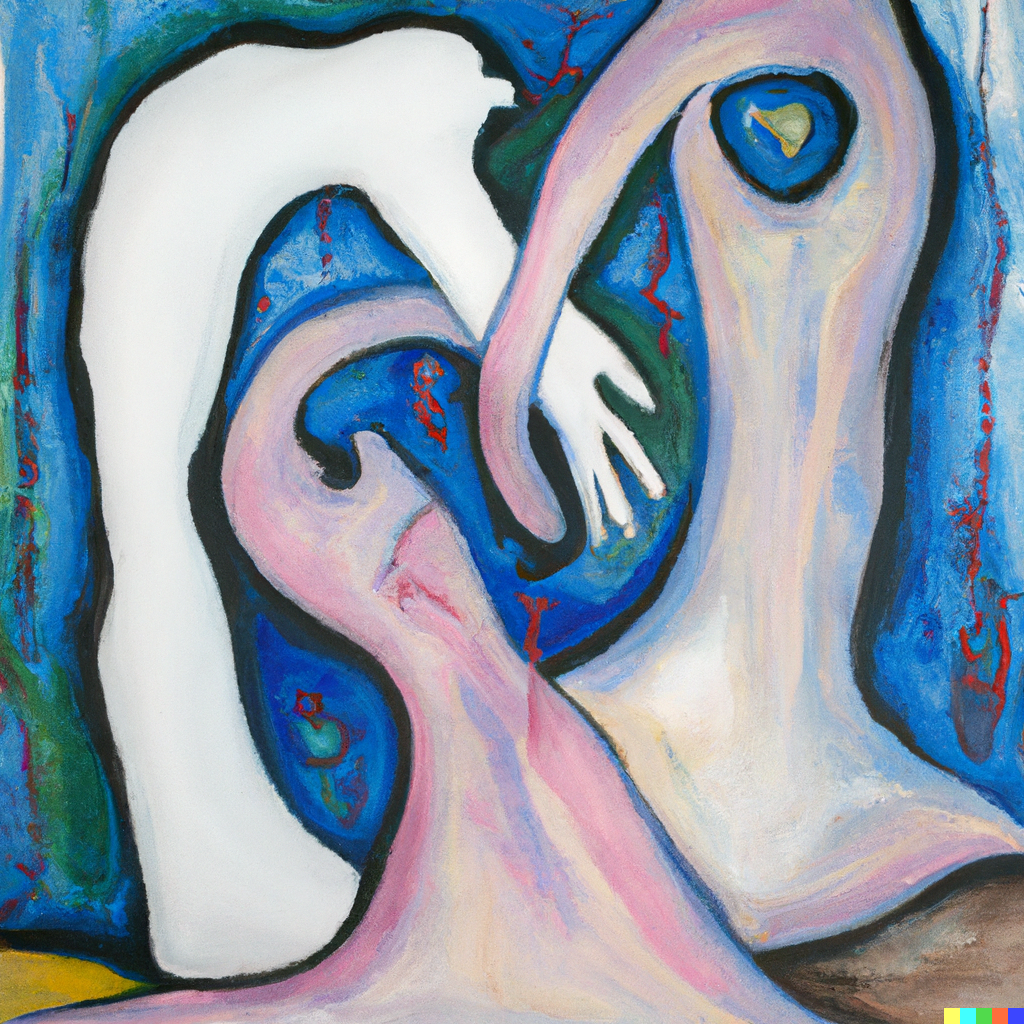
Artwork: DALL-E's response to the prompt: "abstract oil painting of Biblical Abraham sitting on his servant's hand" 


Chayei Sarah: The Pshat of “Place Your Hand Under My Thigh”

When Avraham Avinu charges Eliezer to find a wife for Yitzchak, he begins by saying: Place now your hand under my thigh, and I will have you swear by Hashem, God of heaven and God of earth, that you not take a wife for my son from the daughters of the Canaanites” (Bereishis 24:2). Similarly, when Yaakov is about to die, he tells Yosef: “Please – if I have found favor in your eyes, please place your hand under my thigh and do kindness and truth with me – please do not bury me in Egypt” (ibid. 47:29). The question is: What is the significance of this gesture?

Rashi (ibid. 24:2), citing Chazal’s drashah (Midrash Rabbah ibid.), maintains that “place your hand under my thigh” means “grab hold of the place of my bris milah.” He explains: “one who swears an oath needs to take a mitzvah object in hand, such as a Torah scroll or tefillin, and milah was the first mitzvah for [Avraham], and came to him through pain, and was beloved to him.” According to Rashi, the conduct of Avraham and Yaakov serves as a precedent for the halachic requirement to hold a mitzvah object when making certain types of oaths (see Talmud Bavli Shavuos 38b and Rashi’s commentary there). Rashi does not qualify his comments, nor does he cite any alternative views.


The majority of other Rishonim either oppose or qualify Rashi’s interpretation. The leader of the opposition is Ibn Ezra (Bereishis 24:2) who objects to the notion that Avraham swore by milah, and then offers his own take:

[The Sages] said that [the phrase “place your hand under my thigh”] refers to milah, but if this were so, he would have sworn by his milah and not by Hashem. The more likely explanation to me is that it was customary in those days for a person to place his hand under the thigh of the person who had mastery over him, meaning: “If you are under my dominion, place your hand under my thigh,” and the master would sit on the hand, [as if the servant were] saying: “Behold! My hand is under your dominion to do your will.” This custom is still followed in India today.

Ibn Ezra’s view is cited and endorsed by a number of other Rishonim, including Rashbam (ibid.), Bechor Shor (ibid.), Radak (ibid.), Chizkuni (ibid.), Rabbeinu Bachya (ibid.), Tur (peirush ha’aroch ibid.), Ralbag (ibid.), and Ibn Kaspi (ibid.). Other major commentators highlight the difficulties with Rashi. Abravanel (ibid. question #4) rejects Rashi’s approach as “extremely improbable, for a person cannot take an oath on any mitzvah [object,] like maakeh, sukkah, or lulav, and especially not on milah, which would be disgraceful.” The Rosh (Shavuos 6:1) finds the plain reading of Chazal’s drashah to be so halachically problematic that he relegates it to a mere asmachta (textual allusion) rather than a legitimate halachic source – unlike Rashi, who takes the drashah at its halachic face value.

In sum, Rashi is the minority position among the mainstream commentators who comment on this pasuk. Even those who cite both opinions characterize Rashi’s as “the midrashic approach” and Ibn Ezra’s as “pshat.”

I do not find this to be problematic. However, there are those who find this conclusion to be deeply troublesome. A number of prominent rabbis, among them the Roshei Yeshiva of Beth Medrash Govoha (of Lakewood, NJ), have recently signed a ban on a popular edition of Chumash entitled Pshuto shel Mikra (LNN, 11/15/22). The ban alleges (among other things) that this Chumash constitutes “a stumbling block for the masses” because it presents other traditional commentaries as pshat instead of regarding Rashi as the definitive pshat.

My thoughts on this ban cannot be shared in the space of a 1-page article. Moreover, as of this morning, I have only read 24 pages of the 76-page Kuntress Vayivinu ba’Mikra which explicates the many reasons for the ban. Suffice it to say, as someone who favors the non-Rashi pshat commentators among the Rishonim, I am as disturbed by this ban as its promulgators are disturbed by the Chumash Pshuto shel Mikra. I can’t help but wonder what all the Rishonim cited above would say about this treatment of their Torah.

________________________________________________________________

If you've gained from what you've learned here, please consider contributing to my Patreon at patreon.com/rabbischneeweiss. Alternatively, if you would like to make a direct contribution to the "Rabbi Schneeweiss Torah Content Fund," my Venmo is @Matt-Schneeweiss, and my Zelle and PayPal are mattschneeweiss at gmail.com. Even a small contribution goes a long way to covering the costs of my podcasts, and will provide me with the financial freedom to produce even more Torah content for you.

If you would like to sponsor a day's or a week's worth of content, or if you are interested in enlisting my services as a teacher or tutor, you can reach me at rabbischneeweiss at gmail.com. Thank you to my listeners for listening, thank you to my readers for reading, and thank you to my supporters for supporting my efforts to make Torah ideas available and accessible to everyone.

Be sure to check out my YouTube channel and my podcasts: "The Mishlei Podcast""The Stoic Jew" Podcast"Rambam Bekius" Podcast"Machshavah Lab" Podcast"The Tefilah Podcast"  Email me if you'd like to be added to my WhatsApp group where I share all of my content and public shiur info. 

Friday, November 11, 2022

Vayeira: Don’t Deviate from the Minhag: XTREME Edition

This week's Torah content has been sponsored anonymously. May Hashem grant a refuah shleimah to Rachel bas Rivka Chana.

Click here for a printer-friendly 1-page version of this article, and click here for an audio version.

Artwork: Divine Visitation, by Victor Adame Minguez; flavor text on the card reads: 
"The angels appreciated the offer, but declined to eat any birdseed."

Vayeira: Don’t Deviate from the Minhag: XTREME Edition

Parashas Vayeira opens with Avraham Avinu’s visitation by “three men” (Bereishis 18:2). While some take this description at face value (Ralbag and Bechor Shor) and others maintain that this entire episode took place in a prophetic vision (Rambam and Radak), the majority of commentators – including the Sages of the Talmud – understand these “men” to be angels (see the AlHaTorah Parashah Topics for all the views and sources).

Avraham receives his guests graciously and hastens to perform the mitzvah of hachnasas orchim. After preparing a lavish feast, the Torah tells us that “[Avraham] stood over them beneath the tree and they ate” (18:8). This poses a problem for the mainstream view: if, indeed, these were non-physical angels, how could they eat?

R’ Tanchum bar Chanilai (Bava Metzia 86b) addresses this question by deriving a lesson from their conduct: “a person should never deviate from the minhag, for when Moshe ascended on high [to receive the Torah], he didn’t eat food, [and] when the ministering angels descended below, they ate food.” Sensing that R’ Tanchum sidestepped the real issue, the Gemara asks: “But is it really possible to think that they ate bread?!” The Gemara answers: “Rather, say that they appeared as though they ate and drank.”

What are we to make of this midrashic statement? One approach is to attempt to explain the mechanics of how, exactly, these angels “appeared to eat.” For example, Midrash Rabbah (48:14) states that they “removed portions of food one at a time.” The Daas Zekeinim maintain that they incinerated the food, and that the term “vayocheilu” ought to be translated as “they consumed [with fire]” rather than “they ate.” Tanna d’Vei Eliyahu Rabbah (12) simply refuses to accept our Gemara’s conclusion, declaring:

Anyone who says that the ministering angels didn't eat with Avraham has said nothing! Rather, due to the righteousness of that tzadik and as a reward for his toil on their behalf, Ha'Kadosh Baruch Hu opened their mouths and they ate. Thus, it was stated: "he stood over them under the tree and they ate."

But there is an alternative approach one can take here. Instead of assuming that the midrash is describing these events as they actually happened, one can read R’ Tanchum’s midrash homiletically – that he is teaching us a lesson which has nothing to do with the pshat. Indeed, this is the approach taken by Midrash Seichel Tov (18:8):

They appeared as though they ate, removing the food bit by bit. Why go this far? So [we can] learn derech eretz (proper interpersonal conduct), to conduct oneself in the city in accordance with the customs of its citizens. Behold! Moshe ascended on high and didn’t eat or drink, and went for 40 days and 40 nights without eating and drinking, and these [angels] who came to the human realm made themselves appear to eat and drink in order to beautify the character of Avraham, and so as not to withhold reward from its rightful recipients.

Reading the midrash in this manner obviates the need to engage in abstruse angelological acrobatics to work out how the angels appeared to eat. Moreover, this reading sidesteps the problematic claim that the reason why Moshe Rabbeinu abstained from eating and drinking for 40 days was because he didn’t want to deviate from the minhag of the angels (as opposed to a more metaphysically intrinsic reason, related to Mosaic prophecy).

Why would R’Tanchum express this derech eretz lesson in such dramatic terms? Perhaps he did so the sake of the rhetorical impact. Many of us experience tremendous resistance when asked to change our own conduct to conform to the norms of others. R’ Tanchum framed his teaching this way to speak directly to this resistance: “Even if conforming to the minhag goes against your grain – even if it goes against your very nature – you still must not deviate. Moshe was a physical being – and yet, he abstained from eating and drinking to uphold the custom. The angels were non-physical beings – and yet, they ate so as not to upset their host. And even if you literally can’t bring yourself to adapt the minhag, then at least do a convincing job of pretending to conform.

________________________________________________________________

If you've gained from what you've learned here, please consider contributing to my Patreon at patreon.com/rabbischneeweiss. Alternatively, if you would like to make a direct contribution to the "Rabbi Schneeweiss Torah Content Fund," my Venmo is @Matt-Schneeweiss, and my Zelle and PayPal are mattschneeweiss at gmail.com. Even a small contribution goes a long way to covering the costs of my podcasts, and will provide me with the financial freedom to produce even more Torah content for you.

If you would like to sponsor a day's or a week's worth of content, or if you are interested in enlisting my services as a teacher or tutor, you can reach me at rabbischneeweiss at gmail.com. Thank you to my listeners for listening, thank you to my readers for reading, and thank you to my supporters for supporting my efforts to make Torah ideas available and accessible to everyone.

Be sure to check out my YouTube channel and my podcasts: "The Mishlei Podcast""The Stoic Jew" Podcast"Rambam Bekius" Podcast"Machshavah Lab" Podcast"The Tefilah Podcast"  Email me if you'd like to be added to my WhatsApp group where I share all of my content and public shiur info. 

Friday, November 4, 2022

Lech Lecha: Is Circumcision "Mutilation"?

This week's Torah content has been sponsored by my friend and colleague, Rabbi Dr. Elie Feder. Rabbi Feder recently published a book called Gematria Refigured: A New Look at How the Torah Conveys Ideas Through Numbers (2022, Mosaica Press). The approach to gematria he presents in this book is neither fluffy nor fanciful, but rational. If you're interested in some sample chapters, click here. If you have a social media platform and are interested in promoting or reviewing Rabbi Feder's book, let me know and I'll put the two of you in touch. The book is available for purchase at Mosaica Press.

Click here for a printer-friendly 1-page version of this article, and click here for an audio version.

Artwork: "Abstract Painting of Circumcision," by DALL-E

Lech Lecha: Is Circumcision "Mutilation"?

Most Jews would answer, “No! Of course not!” In truth, this is a machlokess. Sefer ha’Chinuch (Mitzvah #2) writes:

It is known to those who understand that the perfection of man’s [bodily] form requires the removal of the foreskin, which is excess to it. The reason for this mitzvah is that Hashem desired to establish a sign in the bodies of the people He singled out to be called by His name (i.e. Israel) in order to differentiate them from the other nations in the form of their bodies, just like they are differentiated from them in the form of their souls, whose source (i.e. the knowledge we comprehend) and preparedness are not equal. He established this differentiation on the male organ, which is the cause of the preservation of the species, in addition to the fact that it contains a perfection of the bodily form, as we explained. Hashem desired His chosen nation to perfect their anatomy, and He wanted this perfection to come about through human agency – rather than creating man perfect from birth – to allude to him that just as the perfection of his bodily form is through his own agency, so too it is within his power to perfect the form of his soul through proper actions.

Rambam disagrees. He begins his discourse on the reasons for circumcision (Moreh ha’Nevuchim 3:49) by expressly rejecting the Sefer ha’Chinuch’s premise, and then goes on to provide the first of his two explanations:

Some people believe that circumcision is to remove a defect in man’s bodily form, but everyone can easily reply, “How can products of nature be deficient so as to require external completion, especially since the use of the foreskin to that organ is evident?” This commandment has not been prescribed as a remedy to a deficient physical creation, but as a means for perfecting man’s moral shortcomings. The bodily injury (nezek gufani) caused to that organ is exactly that which is desired; it does not interrupt any vital function, nor does it destroy the power of reproduction. Circumcision simply counteracts excessive lust; for there is no doubt that circumcision weakens the power of sexual excitement, and can lessen the natural enjoyment … This is, as I believe, the best reason for the commandment concerning circumcision.

Now if we’re honest, we’ll concede that both Sefer ha’Chinuch and Rambam make factually problematic claims. Modern science sides with Rambam against the Sefer ha’Chinuch: since the foreskin has biological functions, it is therefore not “extra.” However, there is no definitive evidence for Rambam’s claim that circumcision decreases lust or enjoyment. Nevertheless, the ideas reflected in their explanations are true. Circumcision does differentiate us in our bodies, which alludes to the difference in our souls (i.e. our minds), as Sefer ha’Chinuch explained. Likewise, the act of diminishing the male sexual organ symbolically conveys Judaism’s stance on the relationship between body and soul, as the Rambam writes: “indulgence in excessive bodily pleasure deteriorates the soul, and the development of the soul demands a curtailment of bodily indulgences” (Intro to the Mishnah).

Does the Rambam’s view lend support to those who protest circumcision, framing it as a form of genital mutilation? No! To the contrary – such protests vindicate the Rambam’s view, insofar as they underscore the difference between Torah and non-Torah value systems.

sTo “mutilate” means “to injure, disfigure, or make imperfect by removing or irreparably damaging parts” (www.dictionary.com), but whether a particular act constitutes mutilation is entirely dependent on one’s value system. A society that values physical appearances will regard cosmetic plastic surgery as an act of beautification rather than mutilation, even though the surgeon physically injures the body. A society that values athletic competition will cheer when football players repeatedly collide against each other, inflicting severe brain injury and irreparable bodily harm. So too, a society that fundamentally regards human beings as animals and values the pursuit of pleasure above all will strenuously object to a procedure designed to reduce sexual pleasure. The same mother who forcibly imposes female beauty standards on her infant daughter by piercing her ears will condemn circumcision as a form of infant abuse.

Thus, the very fact that “non-Jews protest against chukim” (Yoma 67b) like milah ought to be a matter of pride – not shame. Those steeped in materialism will not be able to fathom mitzvos which serve non-materialistic ends.

________________________________________________________________

If you've gained from what you've learned here, please consider contributing to my Patreon at patreon.com/rabbischneeweiss. Alternatively, if you would like to make a direct contribution to the "Rabbi Schneeweiss Torah Content Fund," my Venmo is @Matt-Schneeweiss, and my Zelle and PayPal are mattschneeweiss at gmail.com. Even a small contribution goes a long way to covering the costs of my podcasts, and will provide me with the financial freedom to produce even more Torah content for you.

If you would like to sponsor a day's or a week's worth of content, or if you are interested in enlisting my services as a teacher or tutor, you can reach me at rabbischneeweiss at gmail.com. Thank you to my listeners for listening, thank you to my readers for reading, and thank you to my supporters for supporting my efforts to make Torah ideas available and accessible to everyone.

Be sure to check out my YouTube channel and my podcasts: "The Mishlei Podcast""The Stoic Jew" Podcast"Rambam Bekius" Podcast"Machshavah Lab" Podcast"The Tefilah Podcast"  Email me if you'd like to be added to my WhatsApp group where I share all of my content and public shiur info. 

Wednesday, November 2, 2022

Beur Tefilah: Who is the “Aleinu” in Sim Shalom?

This week's Torah content has been sponsored by my friend and colleague, Rabbi Dr. Elie Feder. Rabbi Feder recently published a book called Gematria Refigured: A New Look at How the Torah Conveys Ideas Through Numbers (2022, Mosaica Press). The approach to gematria he presents in this book is neither fluffy nor fanciful, but rational. If you're interested in some sample chapters, click here. If you have a social media platform and are interested in promoting or reviewing Rabbi Feder's book, let me know and I'll put the two of you in touch. The book is available for purchase at Mosaica Press.

Click here for a printer-friendly 1-page version of this article, and click here for an audio version.


Beur Tefilah: Who is the “Aleinu” in Sim Shalom?

Sim Shalom, the final berachah of the amidah, opens with the sentence: “Establish peace, goodness and blessing, favor and kindness and mercy aleinu (upon us) ve’al kol Yisarel amecha (and upon all Israel, Your people).” The question is: to whom does “aleinu” refer? Ordinarily we might read this word as a collective reference to the Jewish people, but if that were the case here, the next phrase, “ve’al kol Yisarel amecha,” would be redundant.

It is tempting to answer that “aleinu” refers to the congregation or group of people with whom one is davening. However, R’ Yitzchak Eliyahu Landau (in his Siddur Dober Shalom commentary, published in Siddur Otzar ha’Tefilos) rejects this interpretation, arguing that an individual davening alone ought to then change the word from aleinu (upon us) to alai (upon me). He answers that since peace requires harmony between at least two parties, we ask Hashem to establish peace aleinu, “between me and that which opposes me,” whatever that opposition may be.

I, on the other hand, prefer to answer that “aleinu” refers to mankind as a whole. We ask Hashem to “establish peace upon us [human beings in general,] and upon all Israel, Your people, [in specific].” This accords with the position of R’ Chanina, deputy of the kohanim, who said: “daven for the peace of the government, because were it not for people’s fear of it, each man would swallow his fellow alive” (Avos 3:2). Rabbeinu Yonah there (ibid.) writes:

This means to say that a person should daven for the peace of the entire world and feel pain over the pain of others. Such is the way of the tzadikim, as David said: “But as for me, when they (i.e. my enemies and oppressors) were ill, my clothing was sackcloth, and I afflicted myself with fasting; may my prayer return upon my own bosom” (Tehilim 35:13), for a person should not make his supplications and requests for his own needs alone, but should daven that all humanity should be in a state of peace. And with the peace of the government, there will be peace for the world.

Rav Hirsch endorses this approach in his commentary on the next sentence in Sim Shalom: “Bless us, our Father, all as one with the light of Your countenance, for through the light of Your countenance you have given us, etc.:”

Once this light will enlighten us all equally, once we will all be of one mind in the recognition of God and of what is pleasing in His sight, then the peaceful harmony of life will be a natural outgrowth of this unity of conviction and endeavor. For through this enlightenment all of us are given the Divine Law of life to aid us in the acquisition of understanding, the love of selfless devotion to shape our conviction, and loyalty to duty as the character trait to motivate our conduct. In this manner blessing, compassion, life and peace will come to all men.

Ralbag (Bereishis 1:3; Bamidbar 6:25; Mishlei 16:15) maintains that “light of Your countenance” means knowledge. Rambam (Moreh 3:11) explains that since all interpersonal conflicts are caused by ignorance, therefore, peace can only come about through knowledge, and this will be the cause of world peace at the time of Moshiach:

Just as a blind man, because of absence of sight, does not cease stumbling, being wounded, and wounding others, because he has nobody to guide him on his way, so too, the various sects of men – each according to the extent of his ignorance – does to himself and to others great evils from which individuals of the species suffer. If there were knowledge, whose relation to the human form is like that of the faculty of sight to the eye, they would refrain from doing any harm to themselves and to others. For the knowledge of truth removes hatred and quarrels, and prevents mutual harms … The prophet points out what will be the cause of this change [in the Messianic era], for he says that hatred, quarrel, and fighting will come to an end, because men will then have a true knowledge of God. “They will neither injure nor destroy in all of My holy mountain; for the earth will be as filled with knowledge of Hashem as water covers the seabed” (Yeshayahu 11:9).

This interpretation of Sim Shalom flows from the penultimate statement in the previous berachah of Modim: “and all living beings will thank You, Selah, and they will praise Your Name in truth.” That is, when all human beings thank and praise Hashem, then He will establish peace upon all mankind, and will bless His people Israel with peace.

________________________________________________________________

If you've gained from what you've learned here, please consider contributing to my Patreon at patreon.com/rabbischneeweiss. Alternatively, if you would like to make a direct contribution to the "Rabbi Schneeweiss Torah Content Fund," my Venmo is @Matt-Schneeweiss, and my Zelle and PayPal are mattschneeweiss at gmail.com. Even a small contribution goes a long way to covering the costs of my podcasts, and will provide me with the financial freedom to produce even more Torah content for you.

If you would like to sponsor a day's or a week's worth of content, or if you are interested in enlisting my services as a teacher or tutor, you can reach me at rabbischneeweiss at gmail.com. Thank you to my listeners for listening, thank you to my readers for reading, and thank you to my supporters for supporting my efforts to make Torah ideas available and accessible to everyone.

Be sure to check out my YouTube channel and my podcasts: "The Mishlei Podcast""The Stoic Jew" Podcast"Rambam Bekius" Podcast"Machshavah Lab" Podcast"The Tefilah Podcast"  Email me if you'd like to be added to my WhatsApp group where I share all of my content and public shiur info. 

Friday, October 28, 2022

Noach: Shadal’s Radical Application of Dibrah Torah ki’Lshon Bnei Adam

This week's Torah learning has been sponsored by Vanessa, the first person who offered to cover the costs of my Zoom account for the year. Thank you, Vanessa! 

Click here for a printer-friendly 1-page version of this article, and click here for an audio version.

Artwork: DALL-E's response to the prompt, 
"painting in the style of Van Gogh of Noah bringing an animal sacrifice"

Noach: Shadal’s Radical Application of Dibrah Torah ki’Lshon Bnei Adam

Parashas Bereishis features a handful of “extreme” anthropomorphisms: “Let Us make man in Our Image” (1:26), “They heard the sound of Hashem-God walking in the garden” (3:6), and “Hashem regretted having made man on earth, and He was pained to His heart” (6:6). Another example can be found in Parashas Noach. After Noach emerges from the Ark and brings burnt-offerings to Hashem, we are told that “Hashem smelled the soothing fragrance” (8:21), then declared that He would no longer curse the earth or smite all living creatures. Shadal (R’ Shmuel David Luzzatto, 1800-1865), quoting Johannes Coccejus (1603-1669), explains that this anthropomorphism “signifies a sacrifice brought to make God forget His anger.” Shadal continues:

(translated from the Italian by Dani Klein, with my own underlining for emphasis) 

This expression, of course, is merely an anthropomorphism suited to the popular understanding of the generation in which the Prophet (i.e. Moshe Rabbeinu) lived (על דרך דברה תורה כלשון בני אדם לפי מצב בינת אנשי הדור שהנביא עומד בו). At this point it is well to consider that the prophet Samuel told Saul, "Has the Lord as great delight in burnt offerings and sacrifices, as in obeying the voice of the Lord? Behold, to obey is better than sacrifice." [I Samuel 15:22]. From then on, we find this concept widespread in Israel; David said: – "For You delight not in sacrifice" [Psalms 51:18]; – "If I were hungry [for sacrifices], I would not tell you" [ibid. 50:12]; – "Burnt offering and sin offerings have You not required" [ibid. 40:7]. All the prophets of the Monarchic period, moreover, expatiated at length on this subject. Hence it should be clear as day that the Torah could not have been written during the Monarchic period, or from the time of Samuel onward, for the Torah speaks the language of people who were on a far lower intellectual plane than that of the Israelites of the Monarchic period (כי התורה דברה כלשון בני אדם אשר שכלם עומד במצב שפל מאוד ממצב ישראל בימי המלכים). 

Before we discuss the “radical” part, let us appreciate Shadal’s main point. Shadal wrote his commentary in the wake of the Haskalah (Jewish Enlightenment), in which the Torah’s authority was challenged from all sides. Maskilim (the so-called “enlightened Jews”) claimed that the Torah was composed during the Monarchic period – specifically, during the reign of Yoshiyahu in the 7th century B.C.E. Shadal argues that if the Torah were composed during this later era, the text would evince a negative attitude towards korbanos, as we see from numerous statements made by national leaders, such as Shmuel, David, Yeshayahu, and Yirmiyahu. Shadal concludes that this positive characterization of God’s response to korbanos is a concession to the lower intellectual level of the Jews in the pre-Monarchic period, and therefore serves as evidence of the Torah’s antiquity. 

It is Shadal’s opening and closing statements (underlined above) which intrigue me the most. I’m not troubled by Shadal’s assertion that the Jews in Moshe’s time were “on a far lower intellectual plane than that of the Israelites of the monarchic period.” The Jews who left Egypt had been steeped in the paganistic Egyptian culture for over two centuries. The Korban Pesach (lit. “sacrifice of skipping”) is predicated on the fact that the Jews were identical with their Egyptian masters in nearly every way and therefore needed to differentiate themselves by rejecting avodah zarah in order to merit redemption. The narratives that follow the Exodus are rife with examples of how attached Bnei Yisrael were to the Egyptian culture from whence they came. Likewise, I am not troubled by the notion that the Torah catered to the earlier generations’ attachment to korbanos. Indeed, this is the basis of the Rambam’s entire theory that korbanos as a whole are (as it were) a concession to the Jews’ attachment to the modes of worship that were ubiquitous at the time the Torah was given (see Moreh 3:32).

What I find both radical and compelling is Shadal’s application of dibrah Torah ki’lshon bnei Adam (Torah speaks in the language of man). This principle is typically invoked to explain the Torah’s use of anthropomorphisms: since it is impossible for the human intellect to have any positive knowledge of God, we are forced to speak of Him in terms which are, strictly speaking, inaccurate. Shadal takes this one step further by claiming that in some cases (at least) the Torah’s specific anthropomorphisms are tailored to the developmental level of the audience to which it was given. This methodological move has enormous implications, which I will leave the reader to consider.  
________________________________________________________________

If you've gained from what you've learned here, please consider contributing to my Patreon at patreon.com/rabbischneeweiss. Alternatively, if you would like to make a direct contribution to the "Rabbi Schneeweiss Torah Content Fund," my Venmo is @Matt-Schneeweiss, and my Zelle and PayPal are mattschneeweiss at gmail.com. Even a small contribution goes a long way to covering the costs of my podcasts, and will provide me with the financial freedom to produce even more Torah content for you.

If you would like to sponsor a day's or a week's worth of content, or if you are interested in enlisting my services as a teacher or tutor, you can reach me at rabbischneeweiss at gmail.com. Thank you to my listeners for listening, thank you to my readers for reading, and thank you to my supporters for supporting my efforts to make Torah ideas available and accessible to everyone.

Be sure to check out my YouTube channel and my podcasts: "The Mishlei Podcast""The Stoic Jew" Podcast"Rambam Bekius" Podcast"Machshavah Lab" Podcast"The Tefilah Podcast"  Email me if you'd like to be added to my WhatsApp group where I share all of my content and public shiur info. 

Tuesday, October 4, 2022

Yom ha’Kippurim 5783: Musings on Erev Yom ha’Kippurim Anxiety

This week's Torah learning has been sponsored by Joey and Estee, whom I'd like to thank for being such an important part of my life.

Click here for a printer-friendly version of this article, and click here for an audio version.

Artwork: Day of Judgment, by Anato Finnstark


Yom ha'Kippurim 5783: Musings on Erev Yom ha'Kippurim Anxiety

This morning I woke up, realized it was Erev Yom ha’Kippurim, and was filled with existential anxiety. I didn’t utilize these past eight days of the Aseres Ymei Teshuvah (Ten Days of Repentance) as much as I could have. I haven’t done my best to maximize my potential throughout the year. I have so many flaws and fall short in my avodas Hashem in so many ways. But then I had a very simple epiphany: the din (judgment) of Yom ha’Kippurim and the kaparah (atonement) of Yom ha’Kippurim are two separate phenomena, and one is not necessarily dependent on the other

By “the din of Yom ha’Kippurim” I am referring to the judgment on humanity which occurs on Rosh ha’Shanah and is finalized on Yom ha’Kippurim. This din pertains to “health and sickness, and death and life, and [other] human circumstances” (Rambam, Commentary on Rosh ha’Shanah Chapter 1 Mishnah 4). Rambam explains how this din works in Hilchos Teshuvah Chapter 3:

Each and every human being has zechuyos (merits) and avonos (iniquities). Someone whose zechuyos are more than their avonos is a tzadik (righteous in terms of this judgment). Someone whose avonos are more than their zechuyos is a rasha (wicked in terms of this judgment). Half and half is a beinoni (one who is in the middle) …

Just as the avonos of a person are weighed against his zechuyos at the time of his death, so too each and every year the avonos of each and every person are weighed against his zechuyos on the Yom Tov of Rosh ha’Shanah. One who is found to be a tzadik is sealed for life; and one who is found to be a rasha is sealed for death. But the beinoni hangs in the balance until Yom ha’Kippurim. If he did teshuvah – he is sealed for life; but if not – he is sealed for death.

Although it is natural to feel anxiety about how our din will turn out, I realized this morning that such anxiety is inevitable, since “this weighing can only take place in the mind of the God of Minds, and He is the [only] One Who knows how to weigh the zechuyos against the avonos” (ibid.). In other words, there is a fantasy at work here beneath the surface. The anxiety makes us feel “if only I had prepared adequately, then I would enter Yom ha’Kippurim with the assurance that I’ll receive a good din!” In truth, such security is impossible. To the contrary – the more perfected a person is, the more uncertain they will be about their din, since they’ll have a more accurate grasp of what perfection entails and how far they are from that ideal. While this state of mind can be productive insofar as it spurs a person to do more teshuvah and mitzvos, it is sheer folly to think that there’s a way to avoid feeling anxious about one’s din. At the end of the day, none of us knows how our din will turn out.

In contrast, the kaparah of Yom ha’Kippurim is available to the entire Jewish people irrespective of their din. The Rambam (Hilchos Teshuvah 1:3) writes:

At a time when we do not have a Beis ha'Mikdash nor a Mizbach Kaparah (Altar of Atonement), all we have is teshuvah. Teshuvah brings kaparah for all transgressions ... And the day of Yom ha'Kippurim, itself, brings kaparah for shavim (i.e. those who engaged in teshuvah), as it is stated, “for on this day he shall atone for you” (Vayikra 16:30).

The Torah does not say, “for on this day he shall atone for tzadikim” or “for those who were sealed for life” but rather “for you” – that is, for all of Klal Yisrael, provided they utilized the Aseres Ymei Teshuvah to be involved in teshuvah, as the Rambam clearly stated: “If [the beinoni] did teshuvah – he is sealed for life; but if not – he is sealed for death.” [1] The kaparah of Yom ha’Kippurim is not tied to the outcome of our din. Unlike our din, which is fraught with uncertainty, kaparah is guaranteed to those who engage in teshuvah. It is for this reason that we can declare as a praise – not as a request – in each of our tefilos: “Blessed are You, Hashem, the King Who pardons and forgives our iniquities and the iniquities of His people, the family of Israel, and removes our sins every single year, King over all the world, Who sanctifies Israel and Yom ha’Kippurim.” Kaparah is within our grasp.

[1] Contrary to what it may seem, the Rambam does not mean that Yom ha’Kippurim only provides kaparah for the specific sins you did teshuvah on; see my article entitled Yom ha’Kippurim 5780: Kaparah as a Means to an End for elaboration.
__________________________________________________________________________
If you've gained from what you've learned here, please consider contributing to my Patreon at www.patreon.com/rabbischneeweiss. Alternatively, if you would like to make a direct contribution to the "Rabbi Schneeweiss Torah Content Fund," my Venmo is @Matt-Schneeweiss, and my Zelle and PayPal are mattschneeweiss at gmail.com. Even a small contribution goes a long way to covering the costs of my podcasts, and will provide me with the financial freedom to produce even more Torah content for you.

If you would like to sponsor a day's or a week's worth of content, or if you are interested in enlisting my services as a teacher or tutor, you can reach me at rabbischneeweiss at gmail.com. Thank you to my listeners for listening, thank you to my readers for reading, and thank you to my supporters for supporting my efforts to make Torah ideas available and accessible to everyone.

Be sure to check out my YouTube channel and my podcasts: "The Mishlei Podcast""The Stoic Jew" Podcast"Rambam Bekius" Podcast"Machshavah Lab" Podcast"The Tefilah Podcast"  Email me if you'd like to be added to my WhatsApp group where I share all of my content and public shiur info. 

Sunday, October 2, 2022

Yom ha'Kippurim Round-up: 5775 - 5783

Artwork: Mountain, by Andreas Rocha

Yom ha'Kippurim Round-up: 5775 - 5783

Last Updated: 10/2/22 at 10:18am

The following is a list of the various shiurim, articles, and podcast episodes I have produced which are relevant to Yom ha'Kippurim, either directly or indirectly.

Shiurim in Video and Audio Form

Yom ha'Kippurim 5783: Ne'ilah - It's Not What You Think It Is (link to the audio version): This is a shiur I gave this past Friday (9/30). I can PRETTY much guarantee that if I ask you, "What is Neilah?" the answer you give will be incorrect. There are some basic facts about Neilah of which most people are unaware. In today's shiur we examined Neilah in light of those facts, and in so doing, arrived at a new - and more accurate - understanding of Ne'ilah and its place within the halachic system.

Yom ha'Kippurim 5782: Vidui Yom ha'Kippurim and the Inner Bears of Our Nature (link to the audio version): This is a shiur I gave this past Friday (9/10) in which I presented my current approach to understanding the Vidui of Yom ha'Kippurim. It begins with the same questions as my 5778 article, but takes them in a different direction, based on an encounter I had with a bear in Southern Washington this past summer. 

Yom ha'Kippurim 5781: Ralbag on the [13] Middos [ha'Rachamim] (link to the audio version): This is the Sunday shiur I gave on Erev Yom ha'Kippurim last year (9/27) on the Ralbag's approach to understanding what we refer to as the Yud Gimmel Middos ha'Rachamim, which the Rav held was the essence of the Yom ha'Kippurim davening. This is the most important Torah shiur I gave last year. If you listen to it before Yom ha'Kippurim, be sure to print out the "cheat sheet" I made as a machzor insert.

Vidui Yom ha'Kippurim: This is the "shiur version" of the 5778 article which I gave at Lomdeha last year. I recommend the article over the video, but the essential content is the same.

Yom ha'Din vs. Yom Teruah (link to the audio version): Although this shiur is primarily about Rosh ha'Shanah, the focus on yom ha'din is relevant to Yom ha'Kippurim, insofar as that's when our din is sealed.

Articles About Yom ha'Kippurim (NOT currently in audio form)

Yom ha'Kippurim 5780: Kaparah as a Means to an End: If you've ever felt hopeless going into Yom ha'Kippurim, then perhaps the approach here (which is not FULLY worked out) will be a game-changer for you as it was for me.

Yom ha'Kippurim 5778: Vidui Yom ha'Kippurim: This is my approach to understanding the unique vidui of Yom ha'Kippurim which is the centerpiece of each of our tefilos. This one was also a game changer for me.

Yom ha'Kippurim 5777: On Being Human: Most of the content in this article was not written by me. It's largely an excerpt from Richard Mitchell's "The Gift of Fire," which I read every Erev Yom ha'Kippurim to get into the proper mindset. It pairs well with the 5780 article, and with my 5782 shiur.

Yom ha'Kippurim 5776: Fasting as "Literal" Self-sacrifice: To my knowledge this is the only thing I've written about fasting on Yom ha'Kippurim. It focuses on a perspective stated by the Abravanel, which is not exactly a "standard" interpretation, but insightful nonetheless.

Yom ha'Kippurim 5775: What is Kaparah?: This is my unfinished theory of what we mean by kaparah (which differs from the approach I wrote about in the 5780 article). I still think these ideas are valuable, even if I haven't fully succeeded in fleshing them out.

Yom ha'Din vs. Yom Teruah: I'm including this Rosh ha'Shanah article here for the reasons mentioned above.

The Stoic Jew Podcast Episodes

Vidui Yom ha'Kippurim and Memento Mori: In this episode I explain how, according to my understanding, Chazal intended the viduy of Yom ha'Kippurim to serve as a vehicle of memento mori (remembering death) in order to spur us to do teshuvah with a greater sense of urgency.

TSJ Interlude: Removing the Evil of the Decree: Here are some semi-scattered thoughts I had about the line in Unesaneh Tokef: "u'teshuvah u'tefilah u'tzedakah maavirin es roa ha'gezeirah." 

Rosh ha'Shanah 5782: Yom ha'Din in Light of Stoicism (Aurelius - Meditations 4:45): Technically speaking, this is about Rosh ha'Shanah, but since it's about the yom ha'din aspect of Rosh ha'Shanah, and that din is sealed on Yom ha'Kippurim, then I consider it to be "on theme" enough to include here. 

Seneca - Letter #18: On Festivals and Fasting (Part 2): In this episode I discuss the haftarah we read on Yom ha'Kippurim, in which Yeshayahu ha'Navi exhorts us about how we should and shouldn't relate to our fasting on the day. 

Tuesday, August 16, 2022

Rav Hirsch on Bad Biographies

The Torah content for this week has been sponsored by Courtney K.

Click here for a printer-friendly version of this article, and click here for an audio version.

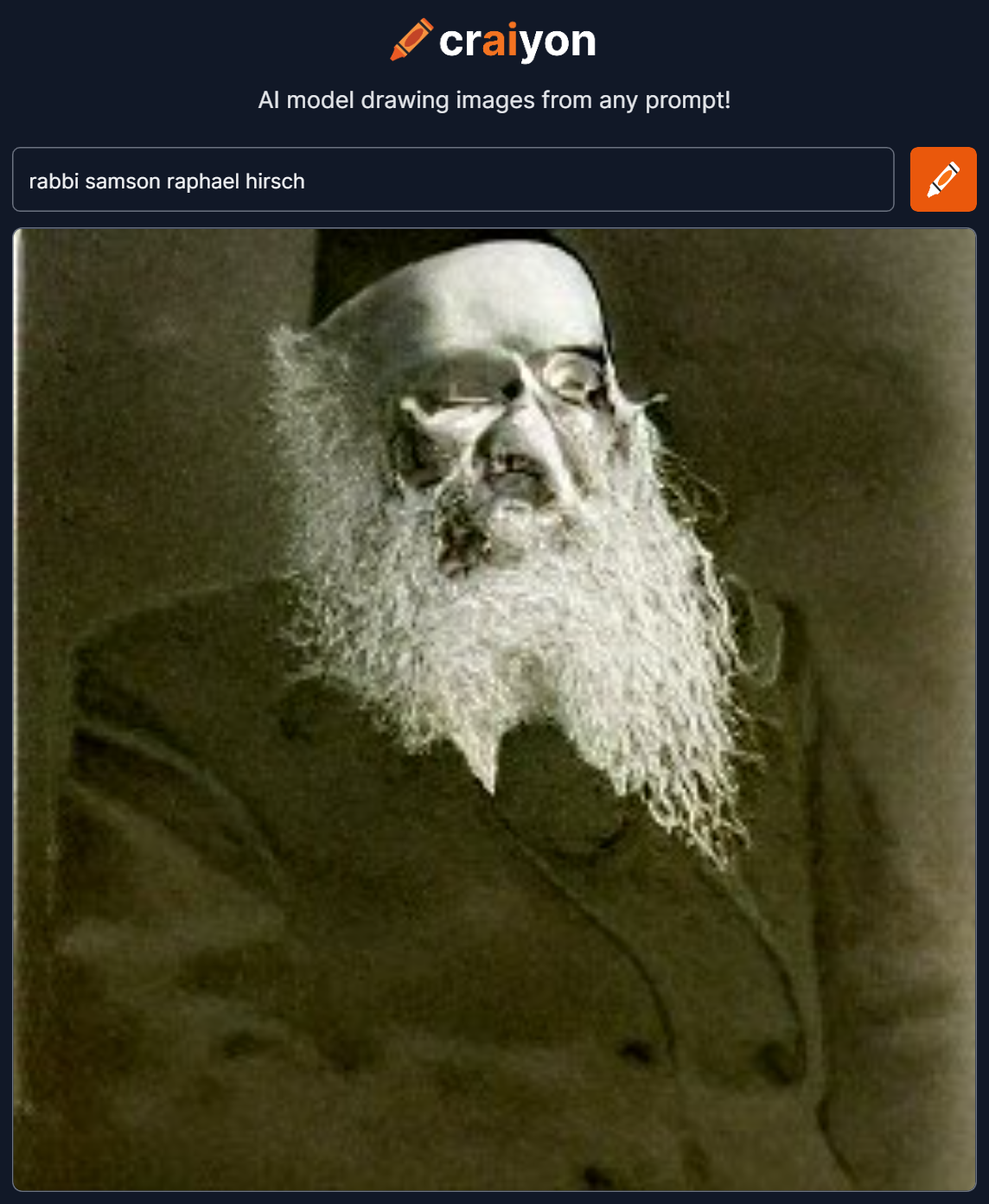
Artwork: horrific AI attempt to produce a portrait of Rabbi Samson Raphael Hirsch

Rav Hirsch on Bad Biographies

I recently started reading a book by Hillel Goldberg called, Between Berlin and Slobodka: Jewish Transition Figures From Eastern Europe (1989), featuring biographies of six towering intellects: R’ Israel Salanter, Harry A. Wolfson, R’ Isaac Hutner, R’ Joseph B. Soloveitchik, Abraham J. Heschel, and Rabbi Joseph Z. Lipovitz. I bought it because Amazon was selling it for only $6 (!) and I figured that it would be beneficial to learn about the impact these six influential men had on Jewry.

I enjoyed reading the book from the get-go. The author is a gifted writer with an engaging style. The blurb on cover testifies that he “spent two decades in research on this biography” – a claim bolstered by the extensive endnotes and bibliography, which fill a whopping 102 pages. I read through the biographies of the first three figures, about whom I had little prior knowledge, and felt like I was learning something … until my reading was brought to a screeching halt by a critical review.

Lawrence J. Kaplan is Professor of Rabbinics and Jewish Philosophy in the Department of Jewish Studies at McGill University. He has written extensively on a wide range of topics and is regarded as one of the foremost experts on the thought of Rabbi Joseph B. Soloveitchik, whose Ish ha-Halakhah (Halakhic Man) he translated into English. When I posted an excerpt from Goldberg’s book on my Facebook wall, Professor Kaplan suggested that I read his critical review essay, published in Daat: A Journal of Jewish Philosophy and Kabbalah (no.35, pp. V-XXXIV, summer 1995).

Any attempt on my part to summarize Kaplan’s review would fail to do it justice. Its power comes from its thoroughness in exposing the gaps and prejudices in Goldberg’s treatment of his subjects. Instead, I will cite his closing paragraphs:

Two general points emerge from my lengthy examination and critique of Goldberg's treatment of his four central transition figures; the first is negative, the second, positive. First, to return to my starting point, while Goldberg claims to evaluate these figures in terms of their success at integrating the various clashing worlds within them, I believe I have shown that his evaluations cannot be sustained and that what he is really offering us is a purely theological judgment in a scholarly garb. Second, my own alternative analysis of the thought of these figures, while necessarily sketchy and incomplete, leads to the tentative conclusion that they, to use Goldberg's ostensible criterion, were, despite tensions and even contradictions, considerably more successful in integrating these worlds than Goldberg would have us think.

Have I been too harsh on Between Berlin and Slobodka? Did I not state earlier that it deals with a large and important subject and did I not concede to it many considerable strengths? Why then the sharpness of my tone?

If I have taken the book to task in so uncompromising and critical a fashion, it is precisely because I, like my old friend Hillel Goldberg, am simultaneously committed to the values of Jewish Orthodoxy and intellectual responsibility, and because I believe that Goldberg has, in writing this work, allowed, however unwittingly, the former value to override the latter. I am sure I need not remind Goldberg that the rabbinic tradition itself affirms, "Truth is the seal of the Holy one, blessed be He," and, that Rav Kook, whose strict Orthodoxy Goldberg would certainly not wish to deny, adds, "The truth is more beloved than everything, and precisely in it will the Exalted One, blessed be He, be praised.”

Anyone wishing to study the phenomenon of Jewish transition figures from Eastern Europe in the twentieth century will find much valuable data and many stimulating and incisive observations and insights in Between Berlin and Slobodka. The book as a whole, however, falls far short of its stated goals.

Kaplan’s review shook me on two levels. First, it reminded me of how dependent we are on experts in fields outside of our own expertise, and how easy it is to misplace our trust without realizing it. I had never heard of Hillel Goldberg, but I trusted him because he published a book which appeared to be based on copious amounts of research. I then shifted my trust to Kaplan based on the substance of his critique, strengthened by my small measure of firsthand familiarity with his scholarly prowess. But what would happen if another expert I trusted penned an essay defending Goldberg’s analysis? I would be left with compelling cases on both sides, and I would feel helpless to draw my own conclusions. The obvious “solution” of “go forth, study the collective works of Rav Hutner in light of all biographical data, and form your own conclusions” is not practical. This dilemma is not unique to intellectual biographies, and that’s what scares me. I realize this isn’t a new or profound insight. Just a rude reminder of an unavoidable limitation on the human intellect.

Second, Kaplan’s critique reminded me of how much subjectivity is involved in any attempt to capture the essence of a human life in writing. This, in turn, prompted me to recall Rav Samson Raphael Hirsch’s critique of Heinreich Graetz’s seminal work, History of the Jews. For those who are unfamiliar, here is an informational blurb excerpted from Collected Writings of Rabbi Samson Raphael Hirsch: Volume V (1988, Feldheim):

The historian Dr. Heinrich Graetz (1817-1891) was a professor at the Judisch-Theologische Seminar in Breslau where he published his eleven-volume History of the Jews (1853-1870). He reflected the ideological tendencies of his academic institution by accepting Biblical criticism and by believing in the historical evolution, rather than the Divine origin, of the Oral Law … Although Graetz was personally traditional in practice (and a student of Rabbi Samson Raphael Hirsch while the latter was Rabbi in Oldenburg), his work was used by those who wished to reform Orthodox Judaism. Recognizing its danger to Torah Judaism, Hirsch reacted strongly with a “critical examination” of Graetz’s fourth volume. In a series of twelve articles in his journal Jeschurun, Hirsch quoted the pertinent passages from Graetz’s History and then disproved his theses regarding the Oral Law.

Here is Rav Hirsch’s scathing critique of Graetz’s work, which I will present here in full. (Parenthetically, I hope you’ll be able to see why this ranks among my favorite written reviews of anything, ever.)

I once had a young friend who was a deaf-mute. He was a rather popular artist in one of the German provincial capitals. All his portraits looked very much alike, yet they were not truly alike. He had a habit – we called it a peculiarity – of painting all his pictures in colossal dimensions. All his paintings were much larger than life and therefore had a strange, spectral look. One could readily surmise that the subject had sat for the portrait, but one could not state with certainty that this was indeed the one. Recognition was not the result of a visual impression, but of reflection. The portrait hinted at the identity of the subject, but it was clear that the artist had not painted his subject in terms of objective reality. He had only captured the subjective impression made upon him by the personality of his subject.

When it comes to a human subject, the artist’s eye is not his only medium of perception; the portraitist is influenced also by his emotions. Any contemplation of a human subject entails the conception of an intellectual personality. The subjective image of a subject, which is largely influenced by personal likes and dislikes, will unconsciously guide the brush in the artist’s hand. Such an image may often be entirely inaccurate. In addition, it may be further influenced by accidental poses of the subject, or even by the subject’s – or the artist’s – momentary state of health or ill-health.

This should explain the many portraits which, though they cannot be dismissed out of hand as “bad,” show features so unlike the subject and are so much at variance with his true character, that those better acquainted with him – especially his closest friends and relations – will categorically reject the portrait. The artist has captured in his work a trait that is transient or accidental (and colored by the artist’s own subjective impressions) as if it were a permanent aspect of his subject’s personality. In fact, the portrait flagrantly contradicts the character of the person they know. Regarding our deaf-mute friend, it might be worthwhile to make a psychological study to establish whether deaf-mute artists see their human subjects in a light so basically different from normal portraitists that there must always be something unusual about any portrait painted by a deaf-mute. 

Now imagine an artist whose natural angle of vision causes him to see his subjects not larger, but smaller than life. Imagine further that, over many years, this artist created portraits for which his subjects never sat. He based his work on some isolated trait in his subjects that may have come to his attention by accident and that, in addition, may have been distorted by the artist’s hasty judgment or misinterpretation. This artist then brings his creative imagination into play, using this one trait as a basis for interpreting the personality of the subject as a whole. He portrays his subjects as he saw them once, in unguarded moods, positions or activities: the one in a playful mood, the other in a pensive state; the one laughing, the other weeping; the one angry, the other joking. Some of his subjects are made to appear indignant, arrogant or impudent, while others look depressed, anxious, humble or embarrassed. But in thus portraying a person, the artist has seized upon only one note in that person’s whole range of emotions, a note which, in fact, may have been played only once in the person’s lifetime, but which the artist has perpetuated as the keynote, the dominant character. 

Now let us imagine that, years later, this artist presents to us these sketches as true-to-life portraits, committing the error of explaining the transient moods in which he painted his subjects as typical of their character. “Look,” he says, “this one was always laughing; that one had an evil temper; this one was forever playing games; that one was always deep in thought.” Even worse, he passes off these products of his imagination not only as authentic character sketches of his subjects but as prototypes of all their contemporaries; thus, “during this period, people were laughing all the time; during this other period, they tended to be depressed; this era was one of arrogance; that era was an age of anxiety and timidity.”

Now let us say that, in reply to our look of disbelief, the artist cites ancient chronicles in support of his presentation: “During that year the cherries were sour; as a result, everyone alive at the time had a sour look on his face,” or, “During this year the future looked bright; as a result, everyone was in an unusually friendly mood.” Say, further, that this artist clings to his fancies as if they were absolute truth, so much so that wherever he needs a historical reference to authenticate his portrait he feels free to invent a reference to suit the portrait. Consider all these caprices of artistic fancy, and you have the History of the Jews by Dr. H. Graetz. 

These lines were written to a friend who wanted to hear my opinion of this History soon after its publication. They reflect the impressions which the book made upon me after I read it through only once, without subjecting the author’s views and descriptions to detailed tests in the light of the data and the sources he cites in their support. Even a superficial glance at this so-called “History of the Jews” should be sufficient for anyone with even a slight knowledge of the literature cited by the author as his source material to see that this work presents more fiction than fact.

Since then, I have examined this work in detail and checked it against the cited sources. Leaving aside the religious philosophy for which it is intended as an ideological basis and which its conclusions are meant to support, I have found it to be, even from a purely scientific point of view, a product of the most outrageous, irresponsible superficiality. I therefore consider it my sacred duty to present the results of my investigation to the public.

The main point of Rav Hirsch’s analogy is that, at the end of the day, a biography is a subjective portrait. The force of his analogy lies in its depiction of just how much the author’s subjectivity can skew the accuracy of the biography. According to Kaplan, Goldberg was a tragic victim of his own subjectivity. I say “victim” because his distortion was not intentional, and I say “tragic” because of how much he misrepresents the ideas of these individuals in his account of their contributions. Kaplan goes so far as to write: “In the case of Harry Wolfson and, perhaps also, Abraham Joshua Heschel what Goldberg presents us with are not so much portraits as caricatures.”

On a personal level, I am left with one question: Do I finish reading Goldberg’s book? One the one hand, my newfound awareness of its flaws will help me to take everything I read with a heaping tablespoon of salt. Additionally, Kaplan acknowledged at the end of his review that readers will still “find much valuable data and many stimulating and incisive observations and insights.” He even encouraged me on Facebook to continue reading and to share my thoughts when I’m finished. At the same time, I’m wary about knowingly allowing inaccuracies to enter my mind and take root. Reading the chapter on Rabbi Soloveitchik might not be so bad, since I already have a wealth of diverse biographical snapshots and enough firsthand knowledge of his Torah to form my own views. But do I really want my introduction to Abraham J. Heschel to be a biography that is so slanted by the author’s value judgments that it borders on caricature? 

Although I haven’t made my decision yet, I am inclined to finish the book. Considering what I wrote above about the unavoidable perils of relying on experts and the inherent hazards in every biography, I might as well lean into the process, exposing myself to as many different takes as possible. Theoretically, I will build up a healthy skepticism from the diversity of views while accumulating a core composite image where the differing accounts overlap. Errors will be unavoidable, but that’s par for the course of being a human being with a limited intellect.
__________________________________________________________________________
If you've gained from what you've learned here, please consider contributing to my Patreon at www.patreon.com/rabbischneeweiss. Alternatively, if you would like to make a direct contribution to the "Rabbi Schneeweiss Torah Content Fund," my Venmo is @Matt-Schneeweiss, and my Zelle and PayPal are mattschneeweiss at gmail.com. Even a small contribution goes a long way to covering the costs of my podcasts, and will provide me with the financial freedom to produce even more Torah content for you.

If you would like to sponsor a day's or a week's worth of content, or if you are interested in enlisting my services as a teacher or tutor, you can reach me at rabbischneeweiss at gmail.com. Thank you to my listeners for listening, thank you to my readers for reading, and thank you to my supporters for supporting my efforts to make Torah ideas available and accessible to everyone.

Be sure to check out my YouTube channel and my podcasts: "The Mishlei Podcast""The Stoic Jew" Podcast"Rambam Bekius" Podcast"Machshavah Lab" Podcast"The Tefilah Podcast"  Email me if you'd like to be added to my WhatsApp group where I share all of my content and public shiur info.