Showing posts with label Chumrah. Show all posts

Monday, July 16, 2018

Excessive Righteousness and Foolish Piety

Originally published in August 2012. This version has been toned down significantly.

Click here for a printer-friendly version of this blog post. 


Excessive Righteousness and Foolish Piety

My Shul Rabbi's Message to Congregants 

When my family and I were on our journey to Orthodox Judaism, we were fortunate to find the perfect shul with the perfect rabbi. The shul was filled with Jews from across the spectrum - Chasidish, Modern Orthodox, Zionist, Yeshivish - and the majority of the congregation was, and still is, comprised of baalei teshuvah (non-observant Jews who became observant).

As you might imagine, it might be very daunting for a shul rabbi to please such a diverse crowd - but our shul rabbi is a master. He is completely non-judgmental, and makes everyone feel welcome. His shiurim (classes) and his conversation are filled with enough explanation to make baalei teshuvah feel welcome, and sufficient references to advanced material to please the scholarly crowd.

But there is one message that is often reiterated by our shul rabbi which (I believe) is intended equally for baalei teshuvah and yeshivish students alike: "Don't be too religious." Yes, he says this partially in jest, but usually does so when a congregant inquires about a halacha which is actually just a chumrah (stringency).

I used to think that our rabbi coined this phrase on his own. It wasn't until the first time I read Koheles that I realized he was borrowing the language of the pasuk: "Do not be overly righteous or excessively wise - why should you make yourself desolate?" (Koheles 7:16).

We'll return to this at the end of the post.

Blurry Glasses 

A few years ago my chavrusa (learning partner) brought a short article to my attention:
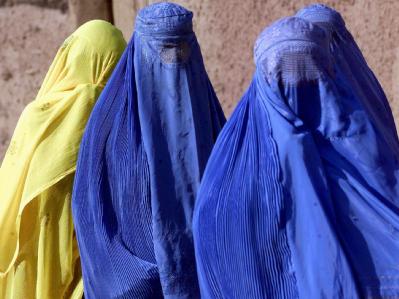
Soon, it will no longer be necessary for charedi men to walk around while covering their eyes with their hands to avoid seeing women.

Recently, a new start-up company has begun marketing and selling special glasses in charedi neighborhoods such as Meah Shearim. The purpose of the glasses is to prevent charedi men from seeing immodestly-dressed women.

The glasses contain blurry lenses that obscure the wearer’s vision and do allow men not to (sic) see more than three meters. For those who already wear glasses, the company has designed stickers that can be affixed to the existing pair of glasses which will obscure the vision.

Yedioth Ahronot reports that the glasses, designed for the charedi community, are intended for charedi men who must go to places where women will be present. The new patent cost the inventors only NIS 25. The patent includes non-prescription glasses and the obscuring stickers. The glasses with the blurry lenses contain perforations at the bottom of the lenses enabling charedi men to look down at the ground through the perforation and still see where they are walking.
My chavrusa pointed out that the subject of this article is straight out of a Gemara (Sotah 22b) we once learned. When sitting down to write this blog post, I found myself paralyzed by the numerous directions it might take. But I think I'll just content myself with citing the text of the Gemara, drawing the connection, and making a few observations here and there - without attempting any grand theories or explanations.

The Scourges of Prushim Ruin the World

In order to fully appreciate the Gemara, we'll need to see it in the context of the Mishnah, which appears on 20a. The last clause of the Mishnah reads:
[R' Yehoshua] used to say: a chasid shoteh (foolish pietist), a rasha arum (cunning evildoer), an ishah prushah, and the scourges of prushim - these are the ruiners [or alternatively: "destroyers"] of the world.
The Gemara explains that each of these terms refers to a personality-type which expresses itself in specific behaviors. For instance, "chasid shoteh" is a man who refuses to save a the life of a drowning woman because he doesn't want to gaze at women. "Rasha arum" is a person who explains his argument to the judge before his fellow litigant arrives, which the Meiri universalizes to mean "someone who strategically harms others for his own benefit in undetectable ways." An "ishah prushah" is the subject of a machlokes (disagreement), which we won't get into now. We will focus on the last item in the list: "scourges of prushim," which is somewhat related to the first. 

I think it will be beneficial to read the Rambam's commentary on this Mishnah, since he gives us a better idea of the types of people we are talking about. The Rambam [1] first explains the term "chasid shoteh":
The Talmud explains that this refers to an individual who exhibits an exaggerated level of [halachic or pseudo-halachic] precaution and scrupulousness to the point where he becomes disgusting in the eyes of people, and he does actions which are not obligatory. It is as if the Mishnah said that he is "shoteh b'chasiduso" ("foolish in his piety"). The Sages said in the Gemara Yerushalmi that anyone who is exempt from something and does it anyway is considered a hedyot (ignoramus, probably related to the Greek idiōtēs).
Similarly, the Meiri [2] defines the chasid shoteh as "a person who makes himself excessively pious in a manner which causes harm, either to himself or to others." He adds a few more examples of this type of behavior: "someone who fasts every day ... someone who sees a baby drowning in a river and says, 'Let me take off my tefillin first' [before he jumps in to save him]."

Next, the Rambam addresses the ambiguity of the term "prushim" (lit. "those who are separated"). The difficulty is that "Prushim" (with an uppercase "P") refers to the Phraisees who opposed the Sadducees during the era of the second Beis ha'Mikdash, whereas "prushim" (with a lowercase "p") means "ascetics." The Rambam first explains the origin of the term and then how it is used in our Mishnah and the accompanying Gemara:
The Sages, of blessed memory, called themselves “Prushim” on account of their separating themselves from vices, abominations, and the pursuit of the phenomena of Olam ha'Zeh (This World) which preoccupy the rest of mankind; instead, they turn towards life in Olam ha'Ba (The World to Come) and lofty matters.

However, there is another type of person who decorates himself with these things and makes himself appear in other people’s eyes that he has separated himself from these lowly and abominable things, while at the same time, these very same things permeate his character, and he only separates himself from them on account of some worldly motive.

This is what the Sages are referring to when they say, “there are seven prushim [who ruin the world],” and they enumerate anyone who makes himself seem pious, due to one of these worldly motivations – for example, so that people should honor him, or that Hashem shouldn’t cause him to lose his money and bring harm to him. In the opinion of the Sages, there is no true parush except for one who serves God out of love, like Avraham Avinu; the other six are despicable, since they add onto their preexisting obligations and exaggerate their external superficialities in order to deceive people.

Therefore, because they add to the Torah and make it despicable, they are nicknamed “scourges” and the Sages refer to them as “the scourges of the prushim.” The Sages said that they are the “destroyers of the world (mechalei olam)” or “ruiners of the world (mevalei olam)” because these things are harmful to man’s existence. 
It should be noted that the Mishnah and Gemara are only condemning those "prushim" whose piety is a sham - not to those who have truly reached the true virtue of prishus, who are praised by Chazal and looked upon with favor in the eyes of Hashem. We'll refer to these as "bad prushim."

The Seven Types of Bad Prushim 

Now we are ready for the Gemara in Sotah 22b, which begins by quoting the braisa referenced by the Rambam above:
The Rabbis have taught in a Braisa: There are seven types of [bad] prushim: (1) the Shechemite Parush, (2) the Scuffed Parush, (3) the Bloodletting Parush, (4) the Pestle Parush, (5) the “What-is-my-obligation-that-I-may-do-it!” Parush, (6) the Parush out of Love, and (7) the Parush out of Fear.
The Gemara then goes on to define each of these terms. I will include the text of the Gemara, followed by Rashi's commentary [3] in brackets:
(1) the Shechemite Parush is one who does an act of Shechem. [Rashi: they circumcised themselves not for the sake of heaven; likewise, this parush's actions are for his own gratification - so that people should honor him - and they are not for the sake of heaven.]

(2) the Scraped Parush: he is the one who knocks his feet together. [Rashi: he walks in a lowly manner, heel to toe, and he doesn't lift his eyes from the ground; as a result of this, he scrapes his toes against the rocks.]

(3) the Bloodletting Parush: he is the one who causes his blood to flow against the walls. [Rashi: he makes himself like one who closes his eyes so as not to look at women, and as a result of this, he crashes his head into the wall and draws blood.]

(4) the “Pestle” Parush: Rabbah bar Shila said that he is one [whose head is] bowed like [a pestle in] a mortar. [Rashi: he walks hunched over.]

(5) the “What-is-my-obligation-that-I-may-do-it!” Parush: [Rashi explains this question to mean: "Teach me what my obligation is and I will do it."] 
[Based on this initial definition, the Gemara asks:] But isn't this is a virtue?! [The Gemara answers:] No, for this person says, “What further obligation is there for me, that I may do it?” [Rashi: "What more can I do that I haven't done?" - and he makes himself appear as though he has fulfilled everything.] 
(6) the Parush out of Love [Rashi: out of love of the reward of the mitzvos, but not out of love for the mitzvos of the Creator] 
(7) the Parush out of Fear [Rashi: out of fear of punishment; rather, what is incumbent upon a person? - To do the mitzvos of Hashem, blessed is He, out of love, as Hashem, our God, commanded us, and the reward will ultimately come.]
It would be very interesting to define all seven prushim and to understand the mentality of each personality type. It would be also be interesting to identify the modern day correlatives. Perhaps we'll do this in a subsequent post, if I can figure all of them out.

It seems clear which category our blurred-glasses-wearing brethren have stumbled into: the "Bloodletting Parush" category. Rashi's description fits perfectly: "he makes himself like one who closes his eyes so as not to look at women." I wonder whether Rashi's use of this somewhat awkward wording ("makes himself like one who closes his eyes") implies that type of parush only pretends to close his eyes. 

Either way, Rashi seems to learn the Gemara's criticism of Bloodletting Prushim to have something to do with the physical harm they bring upon themselves by their misguided attempts to eschew (what they regard to be) situations of sin. True, halacha must be followed no matter what the cost, but if a person's adherence to halacha routinely leads to physical injury, then one must wonder whether that person is actually keeping halacha, or if it is his yetzer ha'ra masquerading under the guise of religiosity. 

Lo Lishmah Exceptions

After mentioning the last two categories of prushim (i.e. the Parush out of Love and the Parush out of Fear), the Gemara comments:
Abaye and Rava said to the tanna [who was reciting the braisa:] “Do not mention the Parush out of Love and the Parush out of Fear [in the list of bad prushim], for Rav Yehuda said in the name of Rav: A person should always involve himself in Torah and mitzvos even she’lo lishmah (not for their own sake), because from she’lo lishmah, he will come to involvement lishmah (for their own sake).” 
According to Abaye and Rava, it was a mistake to include a Parush out of Love and a Parush out of Fear along with the other five individuals mentioned in the braisa. They argued that although it is not ideal to keep halacha out of love of reward or fear of punishment, these are nevertheless valid she'lo lishmah motivations which may lead a person to eventually keep Torah and mitzvos lishmah.

What I find interesting is that Abaye and Rava did not say this about the other five types of prushim. Apparently, their motivations for keeping halacha are not she'lo lishmahs which can lead to lishmah. What is the basis for this distinction? I do not yet have an answer for this. We'll leave it as a question.

Pious Garb

The last point we will consider in this post is about the retribution for this type of prushim behavior, which our Gemara goes on to state:
Rav Nachman ben Yitzchak said: “That which is hidden is hidden and that which is revealed is revealed, but the Great Beis Din will punish those who wrap themselves in gundei.” 
Rashi explains "gundei" to refer to taleisim (plural of "tallis" or "prayer shawl"). He explains the Gemara as follows:
That which is hidden is hidden from people and that which is revealed is revealed [to people]; nevertheless, to the Great Beis Din (i.e. the Heavenly Tribunal), everything is revealed, and it will exact retribution from those who wrap themselves in taleisos and make themselves appear to be prushim when they really are not prushim.
The Aruch, [4] however, learns that the word "gundei" refers to black cloaks. Apparently, even in the time of the Gemara, these types of "bad prushim" wore black in order to appear pious.

What idea is Rav Nachman ben Yitzchak teaching us in this statement? I can't say for certain, but I will take one speculative step. Why do Chazal need to reassure us that a certain aveirah will not go unpunished? Because it must be that on some level we feel that this aveirah will go unpunished. Why might we feel this way about prushim?

Perhaps the answer is simple: we are easily swayed by appearances. If we weren't easily swayed by appearances, everyone would easily see through the facades of these "bad prushim." Even those who know that wearing a black hat and a white beard has absolutely nothing to do with the state of a person's soul vis-a-vis God, it can sometimes be difficult to really feel that this is true. Perhaps this is why Rav Nachman ben Yitzchak emphasizes must tell us that our view is only partial: we only see the outward actions of these people, but not their inner state, and it is their inner state - their knowledge and their true values - which are the real basis of the Divine judgment.

Concluding Thoughts

There you have it: Chazal's diagnosis of "the scourges of prushim." There is much left to think about. But if there's one point that we walk away with, I think it should be this: that these are not new problems. The same personalities we see in the world around us were also walking around in Chazal's time. Chazal knew about them, discussed them, and recorded their thoughts in writing. If we, as a nation, ever hope to remove these ills from our society, we would be wise to understand their teachings on these matters.

And yet, for all of the insights yielded by Chazal's analysis, my shul rabbi's quip ("Don't be too religious") packs a pithier punch. Like Shlomo ha'Melech's warning ("Don't be overly righteous"), his statement prompts us to look at ourselves and examine what we mean by "religious." I'm sure Chazal would approve.

[1] Rabbeinu Moshe ben Maimon (Rambam / Maimonides), Commentary on the Mishnah, Sotah 3:4
[2] Rabbeinu Menachem ha'Meiri, Beis ha'Bechirah, Sotah Chapter 3
[3] Rabbeinu Shlomo ben Yitzchak (Rashi), Commentary on Talmud Bavli: Sotah
[4] Rabbeinu Nosson ben Yechiel (ha'Aruch), Sefer ha'Aruch

Wednesday, July 22, 2015

Pink Hair, the Derech ha'Yachid, and Compulsory Piety

Pink Hair

As many of you know, I am a full-time teacher at a Modern Orthodox Jewish high school. Yesterday we had our end-of-the-year faculty meeting. One issue that came up - and which comes up in every faculty meeting - was tznius (modesty). Almost all Jewish schools have a tznius-based dress code, and all of them have at least some degree of trouble enforcing it. Our school is no different.

I zoned out during the initial discussion of the usual issues (i.e. skirt length, sleeve length, penalties, responsibility of enforcement). Thank God, male teachers are not responsible for enforcing the dress code, since this, itself, would be contrary to the values of tznius. But my ears perked up when this issue was brought to the table:

Note: the girl pictured above is not one of our students,
though it is an accurate depiction of the attitude displayed by some.
Apparently, towards the end of the year, one of our students dyed the tips of her hair pink. The question was raised at the faculty meeting: Should we add a "girls may not dye the tips of their hair" clause to the school's dress code?

The difference in opinion was drastic. Some faculty members were staunchly in favor of the proposed policy, others were vehemently against it, and a variety of reasons were given on both sides:
  • We should ban dyed tips because it's an outright violation of tznius
  • We shouldn't ban dyed tips because it doesn't violate tznius
  • We should ban dyed tips because if one or two students did it, then who knows how many more will follow suit? 
  • We shouldn't ban dyed tips because it was just one or two students; if we ban this, then many more will follow suit! 
  • We should ban dyed tips because people in the community will see our girls and get a bad impression of our school. 
  • We shouldn't ban dyed tips because we've taken away enough forms of personal expression from the girls; since this doesn't violate halacha and isn't immodest, why shouldn't they be able to do this? 
  • We should ban dyed tips because there must be a certain look of professional propriety among students: just as teachers are required to dress for work and the boys in Modern Orthodox schools are required to be clean-shaven, so too, our girls shouldn't be permitted to engage in radical forms of fashion. 
  • We shouldn't ban dyed tips because the girls already view the dress code as oppressive, which causes them to develop a negative attitude toward the value of tznius in general; by crossing the line to banning something as "innocent" as dyed tips, we're just adding fuel to the fire. 
In my opinion, the most outrageous argument for banning dyed tips was made by a well-meaning faculty member who said, "There might not be anything halachically problematic about dyed tips, but I just feel like it's not tznius!" That was the sum total of her objection. I wanted to say, "The stone-throwers in Meah She'arim also legislate tznius based on their feelings," but I held my breath.

My intent in this post is not to discuss the halachos or philosophy of tznius, nor do I wish to delve into the various considerations that go into school policy legislation. I want to discuss one issue, and one issue only: mandating conduct which is lifnim mi'shuras ha'din (beyond the letter of the law). Before we can discuss this, we need a framework. For that we will turn to Rabbeinu Avraham ben ha'Rambam.


The Derech ha'Yachid

Rabbeinu Avraham ben ha'Rambam wrote a sefer entitled Ha'Maspik l'Ovdei Hashem (which was published by Feldheim as a disappointingly loose translation). He begins his work with a general statement about the derech ha'Torah (path of Torah): 
[The derech ha’Torah] is comprised of two paths: the Derech ha’Am (Path of the Nation) and the Derech ha’Yachid (Path of the Individual). 
The Derech ha’Am consists in the fulfillment of the explicit mitzvos – doing the positive ones and avoiding the negative ones – in accordance with the obligation of each Jew ... The adherent of Torah needs to understand what God has commanded in His Torah to do as well as what God has prohibited to do. He must examine how the laws apply to him, and he must accept upon himself to fulfill what is incumbent upon him and to avoid what is prohibited to him. If he does not know what he has been commanded, his derech will not bring him success ...  
Thus, if a person knows what he is obligated to do and he does it, then he is considered to be walking on the straight path which Hashem has placed before him to follow. One who follows the Derech ha’Am in the fulfillment of mitzvos is called “tzadik,” “tam,” “yashar,” and “sar me’rah.” The most accurate of these terms is “tzadik,” which implies “justice” and “fulfillment of one’s obligations,” for the fulfillment of the obligatory mitzvos is the duty to which we are duty-bound by Him (may He be exalted), like the duty of a servant to fulfill the commandment of his master ...  
One who is lax regarding these statutes is called “rasha,” “poshe’a,” “rah,” and “merah,” and other terms which are self-evident and clear. Each of these terms applies to a person in accordance with the severity of his sin and his intention, his laxity or his lack of integrity. The most accurate of these terms is “rasha,” for he commits an injustice by not fulfilling his obligations towards his Master, and he does not supply his rational soul with its proper due. 
Simply put, the Derech ha'Am is what we refer to as "following halacha." However, the Derech ha'Yachid goes beyond halacha:
The Derech ha’Yachid is a way of life directed towards the objectives and underlying ideas behind the mitzvos, and in accordance with the implicit goals of the Torah and the ways of the prophets and the virtuous and the like. One who follows the Derech ha’Yachid is called “kadosh,” “chasid,” “anav” and the like. The most precise of these terms is “chasid,” which is derived from the term “chesed” meaning “voluntariness,” for he voluntarily does what he is not obligated explicitly to do in the Torah.
Avraham ben ha'Rambam expands upon his explanation of the Derech ha'Yachid by contrasting it with the Derech ha'Am and explaining why we refer to each derech by its name:
We say as follows: One who eats matzah and refrains from eating chametz on Chag ha’Matzos, and one who dwells in a sukkah and takes a lulav on Chag ha’Sukkos, and refrains from work on Shabbos and Yom ha’Kippurim, and from eating and drinking on Yom ha’Kippurim, and from laborious work on Yom Tov, and wears tzitzis and puts on tefilin and refrains from prohibited foods and prohibited sexual relations as explicitly stated in the Torah, and strictly observes the positive mitzvos in which he is obligated and does not transgress the negative mitzvos – we say of such a person that he is following the revealed Derech ha’Am
We say “ha’Am” (“of the nation”) because it is the same for the most distinguished members of the Jewish people as well as the masses. Just as Yehoshua bin Nun is prohibited to work on Shabbos and is obligated to dwell in a sukkah on Chag ha’Sukkos, so too, all Jews are prohibited to work on Shabbos and obligated in sukkah-dwelling on Chag ha’Sukkos – those who have already passed on from this world and those who are to come after them, until the end of the generations. We refer to it as “revealed” because every person is capable of understanding it, and therefore, all who willfully transgress it are punished
Beyond this we say that one who understands the underlying idea of Shabbos and its purpose, and fulfills [this underling idea and purpose] through contemplation and involvement in the study of cosmology and physics on Shabbos, and focuses his mind on physical science, and in so doing, connects to inner kedushah; and one who understands the underlying idea of tzitzis and, through wearing them, remembers the mitzvos of Hashem in order to save him from the state of forgetting towards which he is drawn, and in so doing, ascends to the true level of inner kedushah, as it is stated, “and you shall be kedoshim to your God” (Bamidbar 15:40); and one who understands the underlying idea of the prohibited foods, and consequently reduces his intake of permitted foods and is content with eating only that which is beneficial and necessary; and likewise, one who understands the underlying idea of the sexual prohibitions and accepts upon himself to fulfill that which he understands – we say of such a person that he is following the inner Derech ha’Yachid.  
We say that it is “l’yechidim” (“for individuals”) because it is a level which is not reached by every adherent of Torah. We refer to it as “inner” because its obligation is not mentioned explicitly in the Torah, and one who disregards it will not be punished by human courts. 
The Derech ha'Am is binding on and accessible to every member of the nation. The Derech ha'Yachid is neither. Only those who dedicate themselves to the study of mitzvos will be able to understand their underlying objectives and be able to refine their keeping of halacha in accordance with their knowledge. This leads to Avraham ben ha'Rambam's next point: 
It should be obvious from this that the Derech ha’Am is not subject to different levels, for there is no intermediate level between one who eats prohibited food and one who does not eat it, or between one who desecrates Shabbos and one who does not desecrate it; rather, each and every Jew either fulfills this Derech ha’Am or deviates from it.  
The only way there could be a differentiation of levels is regarding the number of mitzvos one violates, or the number of times he transgresses a particular mitzvah. For example, one who neglects many positive mitzvos and violates many prohibitions is a greater transgressor than one who neglects few mitzvos and violates few prohibitions. Likewise, two people who violate the same mitzvah would be on different levels depending on how frequently each of them repeats the action. One who did not make tzitzis for his tallis that he wears every day, or one who continually shaves the corners of his head, cannot be compared to someone who donned a garment obligated in tzitzis without tzitzis once in his life, or shaved the corners of his head one time. In this manner there can be a differentiation of levels in the Derech ha’Am.  
When I said above that for the most part there are not different levels, I implied that some explicit mitzvos actually are subject to different levels. This is because the mitzvah of yirah (fear of God), the mitzvah of ahavah (love of God), and the mitzvah of avodas ha’leiv (“service of the heart” i.e. prayer) are general mitzvos, yet are subject to a great differentiation of levels. Everyone can fulfill them on a basic level, but in their ultimate goals they split off into the two paths: the Derech ha’Am and the Derech ha’Yachid. The action-based mitzvos, on the other hand, are not subject to a differentiation of levels in their performance.  
But as regards the Derech ha’Yachid, the range between the extremes is very broad, as broad as the distance between East and West. Those who follow it are on many distinct levels, even with regards to a single mitzvah, and even a single instance.
Avraham ben ha'Rambam concludes with a beautiful example of keeping one mitzvah on different levels:
For example, consider the Shabbos-observance of three highly perfected individuals. The first person follows the Derech ha'Am, which is to keep Shabbos and to refrain from desecrating it, but adds a derech ha'yachid: namely, through reflecting, in a general way, upon the purpose of Shabbos and contemplating the creation of the universe by remembering that the heavens and earth and all of their array were created during the six days, and that there did not exist any first cause with no prior cause except for the Creator (may He be exalted and glorified), Who gave us the Shabbos.  
The second person’s derech ha'yachid is as follows: he will contemplate these matters in all of their details; he will reflect upon everything that the first person did, but in addition, he will contemplate the entirety of existence and the components he can apprehend in particular, from the center of the earth to the far reaches of the cosmos; he will delve into the wisdom of the Creator (may He be exalted) as manifest in the creation, and he will focus specifically on that which was created on the first day, then the second day, and all the other days, in accordance with that which was stated in the section of Bereishis. 
The third person’s derech ha'yachid is as follows: he will contemplate everything that the second person did, but will delve so deeply into his scientific analysis and study that he will ascend to the level of true kedushah; he will rejoice in his Maker, due to the radiance of the shechinah with which illuminated him in his studies; he will attain proof of His Greatness from the greatness of His creations; he will comprehend the bonds between himself and his Creator, the bond of his intellect and the bond of the mitzvos, which is [one of the intended objectives] of his Creator in our observance of Shabbos, as it is stated, “It is a sign between Me and between Bnei Yisrael forever” (Shemos 31:17); he will diminish his involvement in anything which weakens this bond, and therefore, he will refrain from any eating and drinking on Shabbos which interrupts him from his studies, and he will refrain from off-topic conversation, and certainly from idle chatter. Ultimately, through this derech, he will attain an inner fear of Hashem and love of the Heavens and such a strong yearning for the Living God that even when his limbs crave nourishment, he will not sense hunger, since his soul is fattened with its portion which it has attained, as David stated, “My soul is sated as with fat and abundance” (Tehilim 63:6); sounds will resonate in his ears, but he will be too preoccupied to hear them; perceptible items might pass before his eyes, but he will not see them, as if his eyes are covered. Through his derech he will reach the realm of his desire and the hope of his soul, as it is stated, “Your Name and the remembrance of You are the desire of the soul” (Yeshaya 26:8). Without a doubt this third derech of observing Shabbos is different from the second, as the second is from the first. And certainly, there is an enormous difference between the third and first. 
According to this example you will be able to explain the other darchei ha’yechidim (paths of the unique individuals). One whose derech ha'yachid regarding prohibited foods only affects him to the point where he refrains from gorging himself on meat or becoming drunk with wine is far from one who has reached the level were “a kav of carobs was sufficient for him from one erev Shabbos to the next” (Berachos 17b). 
The same is true of the other darchei ha’yechidim: the distance between their different levels is tremendous and the difference between their followers is great.
Avraham ben ha'Rambam's presentation of the Derech ha'Torah revolutionized my view of the Torah system. Perhaps I will elaborate on that at a later time. For now, let us return to the more pressing matteres of life: should my school add "dyed tips" to its dress code?


Compulsory Piety

Let's go back to the faculty member who said, "There might not be anything halachically problematic about dyed tips, but I feel like it's not tznius." Let us assume, for the moment, that this teacher is correct, and that an argument can be made that a girl who goes out of her way to dye the tips of her hair pink is not conducting herself in accordance with the ideal of tznius. I could see myself agreeing with that.

What I cannot agree with is the ongoing trend in the frum world to force derech ha'yachid standards and practices upon the general populace. The Torah was designed with a derech ha'am and a derech ha'yachid for a very good reason. As Avraham ben ha'Rambam pointed out, the derech ha'yachid is a derech of chesed ("voluntariness"). As a person's understanding of Torah and mitzvos develops, he or she will gradually "volunteer" to supplement his or her observance of halacha with the additional strictures that are dictated by the philosophical objectives of the system. To make these strictures compulsory is to transform this derech chesed into a derech achzarius (path of cruelty).

Other policy-making factors aside, the teacher who "feels" that dyed tips are not tznius is more than welcome to impose this restriction on herself, in accordance with her own understanding of the character and purpose of tznius. It is one thing for a school to enforce halacha, but to enforce the derech ha'yachid is an entirely different matter.

Imagine what would happen if we started enforcing the derech ha'yachid in kashrus, prohibiting people from eating kosher food for pleasure or "merely" for bodily health and only permitting them to eat if we can ensure that they are eating in order to be involved in Avodas Hashem! Or imagine if we required every Jew to spend the entire Shabbos day involved in the study of physics, with minimal eating, drinking, and socializing. The derech ha'am would collapse under the weight of the enforced derech ha'yachid. People wouldn't be able to take it, and would abandon the derech ha'am altogether.

Sounds crazy, right? But this is exactly what is beginning to happen in many other areas of halacha. I don't know when this trend of standardization of middas chasidus started, but there are examples of this everywhere - not just in the world around us, but in the halachic codes which are the foundation of mainstream practice. 

For instance, let us compare the codification of a middas chasidus practice in two halachic works: the Mishneh Torah of the Rambam, and the Shulchan Aruch of R' Yosef Karo. The Rambam devotes Chapter 5 of Hilchos Deos to discussing the behavior appropriate to talmidei chachamim (Torah scholars). He opens the chapter with an introduction:
Just as a chacham is recognizable in his wisdom and character traits and is differentiated from the rest of the nation, so too, he needs to be differentiated in his actions: in his eating and drinking, in his sexual intercourse and the manner in which he uses the bathroom, in his speech, in his manner of walking, in his clothing, in the content of his words, and in his business dealings. All of these actions must be refined and perfected to a very high degree. 
The Rambam then goes on to specify how a chacham should conduct himself in each of these categories of activity. We will focus on a seemingly trivial behavior: walking. The Rambam writes in 5:8:
A talmid chachamim shouldn't walk with an upright posture and an outstretched neck, as it was stated: “walking with outstretched necks and winking eyes” (Yeshaya 3:16); nor should he walk daintily, heel to toe, like women or those who are haughty, in the manner described: “walking with dainty steps, jingling with their feet” (ibid.).
It is clear from the introduction to this chapter that this halacha about walking is lifnim mi'shuras ha'din. These instructions are for talmidei chachimim - not for average Jews. An regular Jewish fellow who walked with an outstretched neck might not be praiseworthy, but he certainly isn't involved in any halachic transgression. 

Compare this to R' Yosef Karo's formulation in the Shulchan Aruch: "It is prohibited to walk with an upright posture" (Orach Chayim 2:6). Period. End of story. If a person were reading the Shulchan Aruch, he or she would walk away with the impression that this requirement is not not just for talmidei chachamim, but for everybody - and it isn't just a lifnim mi'shuras ha'din guideline, but a full-fledged prohibition. 

There are countless other examples of mandating middas chasidus throughout the Shulchan Aruch and the Rema, not to mention the later halachic codes - and that's not even taking into account the advent of Chassidus, the rise of Chareidim, the surge of yeshivish culture, and all of the other sects and factions in the Orthodox world which push lifnim mi'shuras ha'din standards. 

[Note: R' Yosef Karo, himself, discouraged the practice of reading the Shulchan Aruch without having studied the Beis Yosef first. Those who followed R' Yosef Karo's advice would be much more informed, and would most likely be able to differentiate between shuras ha'din and lifnim mi'shuras ha'din. I am merely pointing to the fact that the popularity of the Shulchan Aruch has, unfortunately, helped to spread the notion that these middas chasidus practices are part of the Derech ha'Am - just like eating matzah and keeping Shabbos.]

I am also reminded of the Rambam's statement in Shemoneh Perakim: 
Once in a while, though, some pious individuals would tend toward an extreme, such as fasting, staying awake all night, doing without meat and wine, separating from women, wearing course wool and sackcloth, dwelling on mountainsides, or withdrawing to the desert. But the only reason they did any of these things was to heal themselves, as we have explained ... 
Now, when some fools who had no idea why the pious were acting this way saw them do these things, they thought that was a good way to act, and they did likewise, in the belief that they would thus become like them. They afflicted their bodies in all kinds of ways and believed they would thus achieve personal virtues and were doing good, since (in their minds) that was how a person draws close to God - as if God is the enemy of the body, and wants to destroy it and annihilate it! 
They never realized that those were in fact bad things to do, and that they would acquire flaws that way [instead]. 
They would be like some fool who knew nothing about medicine who saw expert practitioners giving cathartics to dangerously ill patients and not allowing them to eat, and through this they were healed and their lives were quite dramatically saved. The sort of fool we are referring to would say to himself, "If those things can heal a sick person, they would certainly keep a healthy person well and even make him healthier!" And he would start to take them regularly and to do the sorts of things those ill people were doing - but would become ill instead.
The case of which the Rambam speaks here isn't exactly the same as the issue at hand, but the fool's mistake is, in my opinion, analogous to the mistake being made by those who seek to impose derech ha'yachid strictures as mandatory. Lifnim mi'shuras ha'din practices are good, but not for every person at every stage of his or her development. 

Conclusion

I see that my strong feelings on this topic have caused me to turn this blog post into somewhat of a rant. That's okay. I needed to at least start getting these thoughts out in writing, and I think I've done just that. To wrap it up, let me summarize the take-away points:
  1. The derech ha'Torah is comprised of the derech ha'am (i.e. halacha) and the derech ha'yachid (i.e. keeping halacha in accordance with the objectives of the mitzvos and the Torah as a whole).
  2. The derech ha'am is uniformly obligatory on all Jews, whereas the derech ha'yachid is to be taken on voluntarily by each individual in accordance with his level of understanding, his capacities, and his circumstances.
  3. To impose to the derech ha'yachid onto individuals not only conflates the two drachim, but in many cases, will actually harm the individual. That individual's adherence to halacha might be compromised, since he or she will tend to view halacha as more oppressive than it actually needs to be. In the long run, this effect will spread to the society (or community) as a whole.
  4. When legislating halacha-based school policies, we would be wise to take this phenomenon into account. A girl who dyes her hair pink might not be on a high level of tznius, but the Torah intends for her to come to that conclusion on her own, and to modify her practice at her own pace, in accordance with her own understanding. It is not our place to coerce her into keeping lifnim mi'shuras ha'din standards of tznius. This will only breed resentment towards halacha, and will very likely impede her developmental progress towards true tznius
I firmly believe that if we educators successfully established Avraham ben ha'Rambam's framework as the foundation of our students' view of Torah and mitzvos, we could avoid many of the problems which plague our students, our fellow Jews, and ourselves.